
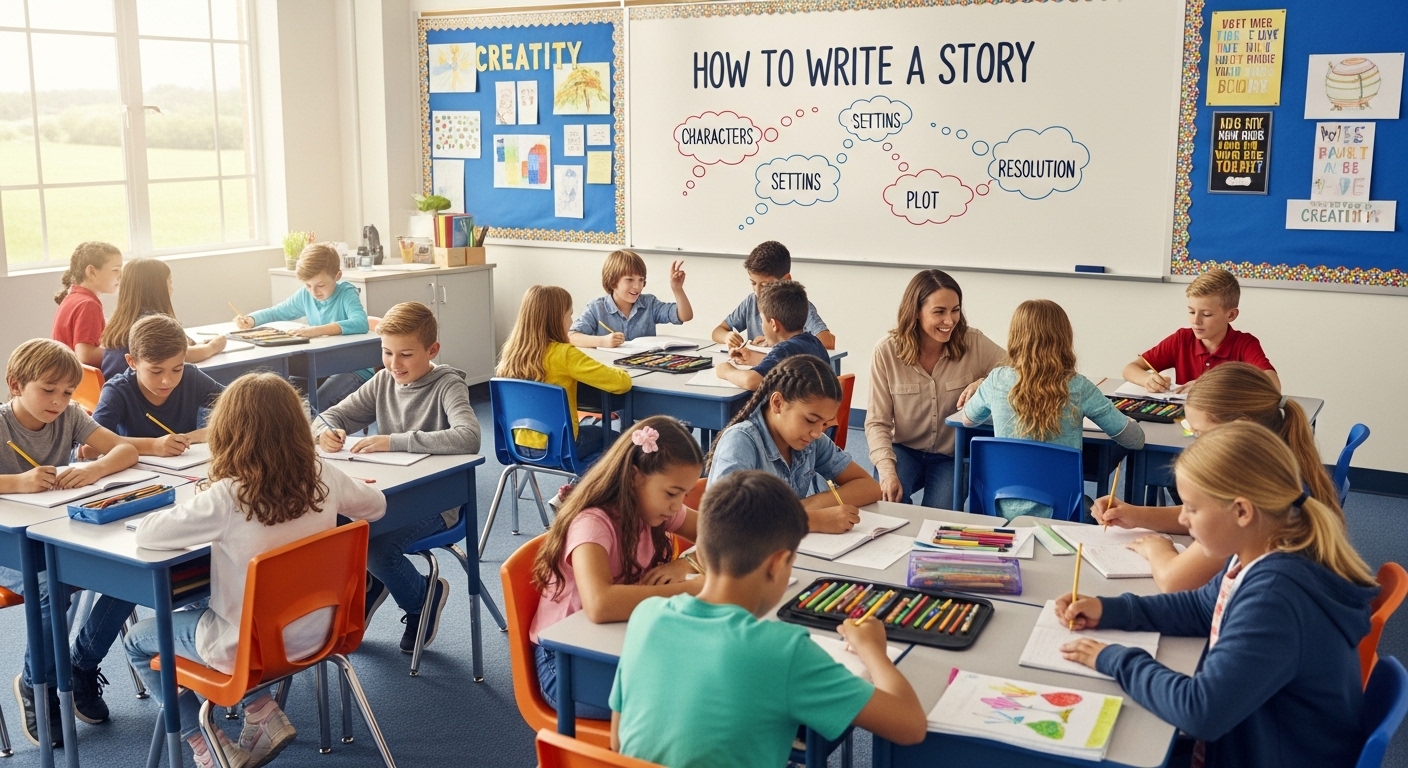
Story writing in Grade 6 represents a major step forward in a student’s academic and creative development. At this level, students are no longer limited to simple, straightforward narratives. Instead, they begin crafting stronger plots with clear conflict and resolution, developing deeper and more relatable characters, exploring meaningful themes, and using more advanced vocabulary and sentence structures. Their stories start to show maturity, logical progression, and emotional depth.
If you’re searching for how to write a story for Grade 6, you’re likely looking for structured guidance that is clear, practical, and detailed enough to genuinely improve writing skills. At the same time, it’s helpful to understand how these skills build progressively from earlier stages, such as How To Write A Story For Grade 5, where students first begin strengthening plot development and descriptive techniques. Grade 6 takes those foundational skills and refines them into more polished and thoughtfully organized narratives.
In this guide, you’ll find step-by-step direction, practical strategies, and advanced storytelling insights designed to help students move confidently from basic storytelling to well-structured, engaging, and impactful writing.
This complete guide covers:
- Story structure for Grade 6
- Step-by-step writing process
- Creative story ideas
- Narrative writing techniques
- Common mistakes to avoid
- Classroom and exam tips
- Market insights for educators and content creators
- Frequently asked questions
Let’s dive in.
Why Story Writing Is Important in Grade 6
By Grade 6, students are expected to:
- Develop structured narratives
- Use descriptive language
- Build conflict and resolution
- Show character development
- Maintain logical sequencing
This is the foundation for advanced academic writing in higher grades.
Market Insight: Growing Demand for Creative Writing Skills
Recent educational trends show increased emphasis on creative writing in middle school curricula worldwide. Schools are prioritizing storytelling skills because they improve:
- Critical thinking
- Emotional intelligence
- Communication skills
- Vocabulary development
In addition, digital platforms and blogging have made storytelling a highly valuable life skill. Parents are actively searching for “creative writing for grade 6,” “narrative writing examples,” and “story writing format for class 6,” making this topic highly searchable and SEO-rich.
Understanding the Structure of a Grade 6 Story
Before writing, students must understand basic story structure.
A strong Grade 6 story usually follows this format:
- Introduction (Beginning)
- Introduce characters
- Set the scene
- Establish the setting (time and place)
Example:
It was a stormy evening when Aarav discovered the mysterious old key in his grandmother’s attic.
- Rising Action (Problem Begins)
- Introduce conflict or challenge
- Build suspense
- Develop curiosity
- Climax (Most Exciting Part)
- The turning point of the story
- The moment of highest tension
- Falling Action
- Events after the climax
- Problem starts resolving
- Conclusion (Ending)
- Resolution of conflict
- Lesson learned (optional)
- Satisfying closure
This classic narrative arc keeps stories organized and engaging.
Step-by-Step Guide: How To Write A Story For Grade 6
Step 1: Choose an Interesting Topic
A good story begins with a strong idea. Popular Grade 6 story topics include:
- A mysterious adventure
- A magical discovery
- A day that changed everything
- An unexpected friendship
- A journey to a new world
SEO Insight
Search queries show high interest in:
- “story ideas for grade 6”
- “creative writing topics for class 6”
- “short story examples for grade 6”
Including such variations in educational content helps boost discoverability.
Step 2: Create Strong Characters
Characters make stories memorable.
Encourage students to think about:
- Name
- Age
- Personality traits
- Strengths and weaknesses
- Goals and fears
For example:
Mia was brave but impatient. She loved solving puzzles but hated waiting for answers.
When characters have personality, the story becomes more realistic and relatable.
Step 3: Build an Engaging Setting
The setting answers:
- Where does the story happen?
- When does it take place?
- What does the environment look like?
Encourage descriptive writing:
Instead of:
It was a forest.
Write:
The forest was dark and silent, with towering trees blocking out the sun.
Descriptive writing improves vocabulary and engagement.
Step 4: Add Conflict
Every good story needs a problem.
Common Grade 6 conflicts include:
- Person vs. Person (argument or rivalry)
- Person vs. Nature (storm, forest, survival)
- Person vs. Self (fear, doubt)
- Person vs. Mystery (hidden secret)
Without conflict, the story feels flat.
Step 5: Show, Don’t Just Tell
Instead of saying:
Rahul was scared.
Write:
Rahul’s hands trembled, and his heart pounded as he stepped into the dark hallway.
This technique makes writing more vivid and professional.
Step 6: Write a Strong Ending
The ending should:
- Solve the problem
- Feel satisfying
- Connect to the beginning
- Leave a lasting impression
Avoid abrupt endings like:
And then I woke up.
Teachers often mark down such conclusions unless used creatively.
Essential Narrative Writing Techniques for Grade 6
- Use Dialogue
Dialogue makes stories lively.
Example:
“Did you hear that noise?” whispered Ananya.
“It came from the basement,” replied Kabir nervously.
Tips:
- Use quotation marks correctly
- Start a new line for each speaker
- Use Sensory Details
Encourage students to describe:
- Sight
- Sound
- Smell
- Taste
- Touch
This strengthens creative writing skills.
- Vary Sentence Structure
Instead of repeating short sentences, mix long and short ones.
Example:
The door creaked open. Slowly. Carefully. As if someone invisible was pushing it.
This creates suspense.
- Use Strong Vocabulary
Replace simple words:
- Big → enormous
- Said → whispered, shouted, replied
- Happy → thrilled, delighted
- Scared → terrified, nervous
But avoid overcomplicating language unnaturally.
Common Mistakes in Grade 6 Story Writing
Understanding mistakes helps students improve faster.
- No Clear Structure
Stories jump from one event to another without flow.
- Weak Endings
The story suddenly stops without resolving the problem.
- Too Many Characters
This confuses readers.
- Grammar and Punctuation Errors
Especially in dialogue writing.
- Repetitive Vocabulary
Using “very” repeatedly instead of stronger adjectives.
Example of a Short Grade 6 Story
Here is a brief example that follows proper structure:
Title: The Hidden Door
Arjun had always wondered what was behind the old wooden door in his school library. It was locked and covered in dust.
One afternoon, while helping the librarian, he found a small silver key inside a book. His heart raced as he walked toward the door.
The key fit perfectly.
When the door opened, he discovered a secret reading room filled with ancient books and glowing lanterns. It was magical.
From that day, Arjun learned that curiosity often leads to incredible discoveries.
This example includes:
- Clear beginning
- Rising action
- Climax
- Resolution
- Lesson
How Teachers Can Improve Grade 6 Story Writing Skills
Educators searching “how to teach story writing to grade 6” often look for classroom strategies.
Effective Techniques:
- Story prompts on the board
- Group storytelling activities
- Peer editing sessions
- Weekly creative writing challenges
- Reading published children’s stories for inspiration
Encouraging consistent practice significantly improves performance.
Assessment Criteria for Grade 6 Story Writing
Most schools grade based on:
- Creativity
- Organization
- Vocabulary
- Grammar
- Originality
- Clarity
- Proper paragraphing
Students should review these criteria before submission.
Creative Story Prompts for Grade 6 Students
Here are engaging writing prompts:
- You wake up with a superpower. What happens?
- A mysterious box appears at your doorstep.
- Your pet starts talking.
- You travel 100 years into the future.
- A new student at school has a secret.
Using prompts stimulates imagination and removes writer’s block.
Time Management Tips for Exams
When writing a story in exams:
- Spend 5 minutes planning
- 20–25 minutes writing
- 5–10 minutes editing
Planning prevents disorganized storytelling.
The Role of Reading in Improving Story Writing
Reading enhances writing skills.
Recommended middle-grade authors include:
- Roald Dahl
- Rick Riordan
- J.K. Rowling
Their storytelling techniques help students understand:
- Humor
- Suspense
- Adventure
- Character arcs
Reading builds subconscious writing skills.
Digital Learning Trends and Story Writing
With the rise of online education platforms, parents increasingly search for:
- Online creative writing classes
- Printable story worksheets
- Grade 6 writing curriculum guides
Educational blogs that provide structured, long-form guidance rank better due to higher dwell time and keyword diversity.
Content creators targeting this niche should include:
- Clear headings
- Structured examples
- FAQ sections
- Internal linking to related topics
- Long-form comprehensive guides (2000+ words)
How Parents Can Support Grade 6 Story Writing
Parents play a major role.
Encourage children to:
- Maintain a daily journal
- Read before bedtime
- Discuss story ideas openly
- Practice rewriting stories creatively
- Watch movies and analyze story structure
Positive reinforcement builds confidence.
Frequently Asked Questions (FAQs)
1. How long should a Grade 6 story be?
Typically 300–800 words, depending on school requirements. Exams may limit word count.
2. What is the best format for story writing in Grade 6?
Follow:
- Title
- Introduction
- Body paragraphs
- Conclusion
Keep paragraphs clear and structured.
3. How can students make their stories more interesting?
- Add conflict
- Use dialogue
- Describe emotions
- Build suspense
- Avoid predictable endings
4. Should Grade 6 stories include moral lessons?
Not always required, but many teachers appreciate meaningful conclusions.
5. How can weak writers improve quickly?
- Read daily
- Practice short stories
- Learn new vocabulary weekly
- Review teacher feedback carefully
Improvement comes with consistency.
Final Thoughts: Mastering Story Writing in Grade 6
Learning how to write a story for Grade 6 is not just about school assignments. It builds creativity, confidence, and communication skills that last a lifetime.
By understanding structure, practicing regularly, developing characters, adding conflict, and refining vocabulary, students can transform simple ideas into engaging stories.
Whether you’re a student aiming for better grades, a parent supporting learning at home, or a teacher designing curriculum, structured storytelling guidance makes a powerful difference.
Creative writing is not a talent reserved for a few — it is a skill that grows with practice.
And Grade 6 is the perfect stage to begin mastering it.