
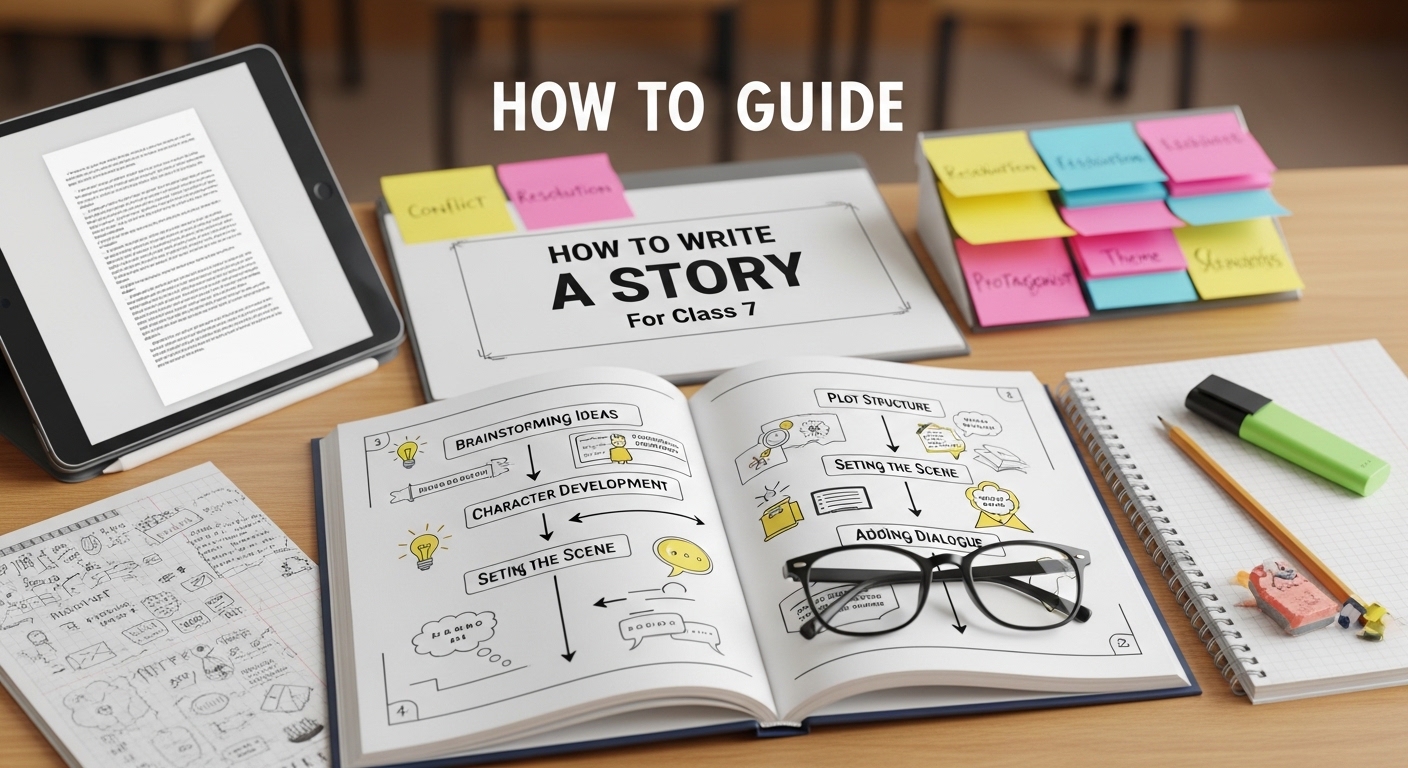
Writing a story for Class 7 students is more than just completing a school assignment—it is an exciting way to express imagination, explore emotions, and develop critical thinking skills. Story writing not only helps students enhance their creativity but also improves language proficiency, vocabulary, and the ability to communicate ideas clearly.
In this guide, we will explore everything students need to know about story writing for Class 7, from understanding core elements to refining their work, with practical tips to make stories engaging and memorable.
Why Story Writing Matters for Class 7 Students
At the Class 7 level, students are transitioning from basic storytelling to more complex narratives. Writing stories helps in several ways:
- Enhancing creativity: Crafting plots and characters exercises the imagination.
- Developing language skills: Writing stories improves vocabulary, grammar, and sentence formation.
- Boosting confidence: Sharing stories encourages students to express themselves.
- Encouraging critical thinking: Creating plots and resolving conflicts teaches logical reasoning.
Story writing is more than academic work—it is a fun and practical way to communicate thoughts, learn empathy, and understand the world around them.
Core Elements of a Story for Class 7
Understanding the building blocks of a story is crucial. A good story consists of characters, setting, plot, conflict, and resolution.
Characters
Characters are the heart of any story. They can be people, animals, or even imaginary beings. In Class 7 stories, characters should be relatable to the readers’ age group.
- Protagonist: The main character who drives the story forward. Example: a student participating in a school science fair.
- Antagonist: The character or force that creates obstacles. Example: a rival student or self-doubt.
- Supporting Characters: Friends, teachers, or family members who influence the plot.
Tip: Give your characters unique traits, like a habit, fear, or talent. This makes them memorable and realistic.
Setting
The setting tells readers where and when the story happens. A clear setting helps readers visualize the story.
- Time: Morning, evening, night, or even historical or future periods.
- Place: School, home, park, or an imaginary world.
- Atmosphere: Descriptive words can create mood—bright and cheerful, dark and suspenseful, or mysterious and magical.
Using sensory details—sight, sound, smell, taste, and touch—enhances the reader’s experience.
Plot
The plot is the sequence of events in a story. Every story has a beginning, middle, and end:
- Beginning: Introduces characters, setting, and hints at the main events.
- Middle: The main events, adventures, or challenges unfold here.
- End: Conflict resolves, and the story concludes.
A strong plot has cause-and-effect relationships: every action leads to a consequence, keeping readers engaged.
Conflict
Conflict is the problem or challenge in a story. Without conflict, a story becomes dull.
Types of conflict suitable for Class 7 stories include:
- Person vs. Person: Conflict between characters.
- Person vs. Self: Internal struggles like fear, doubt, or indecision.
- Person vs. Nature: Challenges from the environment, like storms or being lost.
- Person vs. Society: Characters struggle against rules, expectations, or social norms.
The conflict should gradually build tension and keep readers interested in the outcome.
Resolution
Resolution is how the story concludes and resolves the conflict. The ending should connect to the story and leave the reader satisfied.
- Example: A character afraid of public speaking successfully delivers a presentation.
- Endings can be happy, sad, or thought-provoking but must feel logical and complete.
Developing Creativity for Story Writing
Creativity is the backbone of engaging stories. Students should explore their imagination before starting to write.
Idea Generation Techniques
- Personal Experiences: Everyday events can inspire stories, such as school trips, birthday parties, or small accidents.
- “What If” Scenarios: Imagine unusual situations like “What if animals could talk?” or “What if I found a hidden treasure?”
- Observation: Notice people, animals, or situations around you for story ideas.
- Reading: Stories, novels, or even comics can inspire characters, themes, or plots.
Tip: Keep a notebook to jot down ideas. The more ideas you explore, the more original your stories will be.
Language Skills Through Story Writing
Writing stories improves several aspects of language learning:
- Vocabulary: Descriptive words make the story lively. Example: Instead of “The dog ran,” try “The energetic brown dog sprinted across the grassy field, barking loudly.”
- Grammar: Writing correctly structured sentences enhances clarity.
- Dialogue: Realistic conversations make characters relatable and the story engaging. Proper punctuation is important.
- Paragraphing: Each paragraph should focus on a single event or idea, improving readability.
Story writing is a fun way for Class 7 students to strengthen language skills without formal exercises.
Engaging Readers
A story is only as good as its ability to captivate the reader. Class 7 students should focus on:
- Hooks: Start with an exciting sentence. Example: “I never imagined that a small mistake could change my entire day.”
- Suspense: Keep readers curious about what happens next.
- Emotion: Show how characters feel. Emotions create connections with readers.
- Relatable Themes: Friendship, courage, family, school, and adventure resonate with peers.
Even simple words can be effective if the story is engaging and easy to follow.
Exploring Different Story Types
Class 7 students can try various story genres to develop versatility:
- Adventure: Characters face exciting challenges or journeys.
- Mystery: Stories centered on puzzles, secrets, or detective work.
- Fables & Moral Stories: Lessons taught through animals or fictional characters.
- Science Fiction & Fantasy: Imaginary worlds, magical elements, or futuristic technology.
- Realistic Fiction: Stories that could happen in real life, making them relatable.
Experimenting with different genres helps students find their writing style.
Planning Before Writing
Planning makes story writing smoother and more organized.
- Mind Mapping: Draw a web linking characters, events, and settings.
- Outline: Create a rough structure: beginning, middle, and end.
- Character Profiles: Note traits, strengths, weaknesses, and goals for each character.
Planning prevents writer’s block and ensures the story flows logically.
Writing the First Draft
With planning complete, students can start writing:
- Begin with a hook or scene-setting sentence.
- Introduce characters naturally.
- Describe events with action and dialogue.
- Build conflict to create tension.
- Conclude with a clear resolution.
Tip: Focus on expression first. Editing and improvements come later.
Revising and Editing
Revising is critical to transforming a good story into a great one.
- Check grammar, spelling, and punctuation.
- Ensure logical sequencing of events.
- Remove repetitive or unnecessary details.
- Improve vocabulary and sentence variety.
- Seek feedback from teachers, parents, or peers.
Revision makes stories clearer, more engaging, and enjoyable to read.
Benefits Beyond School
Story writing benefits students beyond academic tasks:
- Communication skills: Helps in essays, letters, and presentations.
- Empathy: Understanding characters’ feelings develops emotional intelligence.
- Critical thinking: Planning plots and resolving conflicts strengthens logic.
- Confidence: Sharing stories encourages self-expression.
- Love for reading and writing: Early practice fosters lifelong habits.
Writing stories is not just about grades—it is about building skills for life.
Final Tips for Class 7 Story Writing
- Start small: Short stories are easier to manage.
- Be imaginative: Let creativity flow freely.
- Practice regularly: Frequent writing improves skill.
- Read more: Learning from others’ stories inspires new ideas.
- Enjoy the process: Story writing should be fun, not stressful.
With these tips, Class 7 students can write stories that are engaging, meaningful, and polished.
Conclusion
Writing a story for Class 7 students is a journey of creativity, learning, and self-expression. By understanding story elements, planning, and practicing regularly, students can craft stories that captivate readers and improve language skills. Story writing is more than a school task—it is a gateway to imagination, confidence, and lifelong skills.
With creativity, dedication, and practice, every student can become a storyteller and share their ideas with the world.