
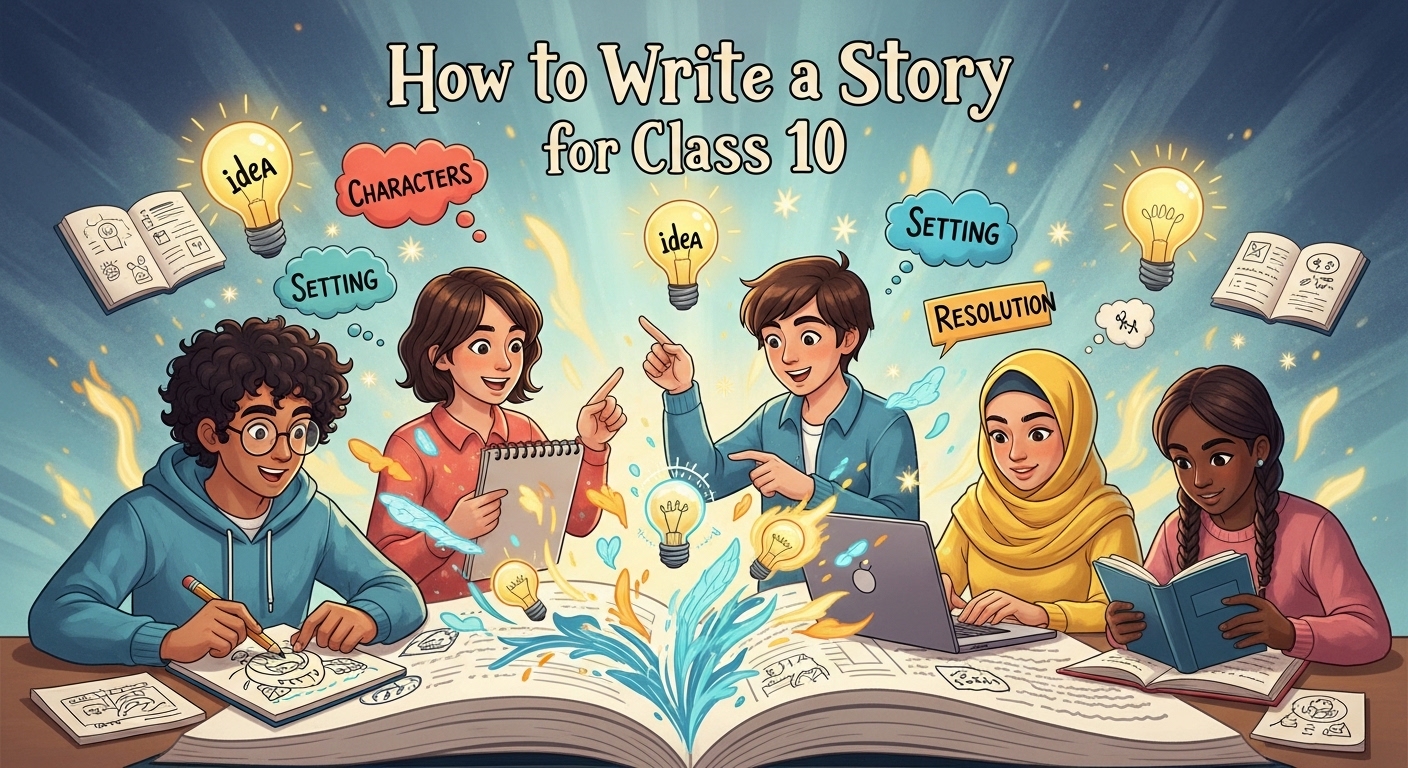
Writing a story for Class 10 isn’t just about completing an assignment—it’s about bringing your imagination to life, organizing ideas clearly, and creating characters and events that leave an impact on the reader. A well-crafted story combines creativity, structure, and meaningful lessons, making it memorable and enjoyable.
Whether you’re exploring realistic scenarios or venturing into magical realms, learning how to write a story fantasy can help you develop skills in character development, worldbuilding, and suspense, all of which make your storytelling richer and more captivating.
In this guide, you’ll discover how to write a story for Class 10 step by step—from brainstorming ideas and planning your plot to crafting engaging characters and revising your final draft. Along the way, we’ll provide examples, tips, and mini-exercises to help you write stories that are imaginative, structured, and ready to impress examiners.
Understanding the Story Question
Before writing, carefully read the prompt or topic. Ask yourself:
- What type of story is expected? (Adventure, mystery, personal experience, moral story)
- Is there a specific theme or lesson you must follow?
- Who is your audience? (Examiners, teachers, or classmates)
Answering these questions helps you stay focused and relevant, avoiding content that strays off-topic. Remember, clarity and structure are just as important as creativity in Class 10 storytelling.
Step 1: Brainstorm Ideas
Start by jotting down ideas without worrying about whether they’re perfect. Techniques include:
- Drawing from personal experiences.
- Observing people or situations in daily life.
- Asking “what if” questions to spark imagination.
Example prompts for inspiration:
- “What if a small act of kindness changes a person’s life?”
- “What if a student discovers a hidden talent that transforms their future?”
Once you have a list, select the idea that excites you the most and seems easiest to expand into a full story. This becomes the foundation of your narrative.
Step 2: Plan Your Story Structure
A strong story has a clear beginning, middle, and end:
- Introduction: Introduce main character(s), setting, and situation.
- Body/Conflict: Present a problem, challenge, or conflict that drives the plot.
- Climax: Show the turning point where tension peaks.
- Conclusion/Resolution: Resolve the conflict and highlight the lesson or moral.
Mini-Exercise: Sketch a 4-point outline of your story with a short sentence for each part. This keeps your story organized and ensures a smooth flow.
Step 3: Develop Engaging Characters
Characters make your story relatable and memorable. Focus on:
- Main character: Has clear goals, motivations, and realistic traits.
- Supporting characters: Friends, family, mentors, or rivals who influence events.
- Villain or challenge: The obstacle your protagonist must overcome.
Add depth by showing feelings, thoughts, and reactions. Readers engage most when characters face dilemmas similar to those in real life.
Step 4: Set the Scene and Build Atmosphere
A story feels alive when the setting is vivid:
- Place and time: City, village, forest, or school.
- Sensory details: Sounds, smells, visuals, and textures.
- Mood and tone: Joyful, suspenseful, mysterious, or emotional.
Example:
“The morning sun fell on the deserted street, shadows of old trees stretching across the cracked pavement. A chill ran down Ananya’s spine as she noticed a small, abandoned wallet near the puddle.”
Vivid descriptions make the story immersive without overloading it with details.
Step 5: Maintain Simple, Clear Language
Class 10 examiners value clarity and correctness over complicated words:
- Use proper grammar, punctuation, and spelling.
- Keep sentences clear and concise.
- Vary vocabulary naturally without forcing complex words.
Short, descriptive lines often engage readers more than long, convoluted sentences.
Step 6: Add Conflict and Moral
Conflict drives the story. It can be:
- External: Challenges, obstacles, or opposition from others.
- Internal: Dilemmas, fears, or moral questions.
Many Class 10 stories also require a lesson or moral:
- Keep it relevant to the plot.
- Show the lesson through character actions and consequences.
- Avoid stating it directly; let readers infer it naturally.
Example: Instead of “Honesty is important,” show it through actions: “Rahul returned the lost wallet, and soon he was trusted with bigger responsibilities at school.”
Step 7: Example Story for Class 10
Title: The Lost Wallet
It was a bright Monday morning when Rahul hurried to school, his bag bouncing against his back. As he crossed the crowded street, he noticed a leather wallet lying near a puddle. Curiosity made him pick it up, and inside, he found cash and an ID card.
A quick glance at the card revealed the owner’s name: Mr. Sharma, a local shopkeeper known for his honesty. Rahul felt a surge of temptation. He could keep the money and no one would know. But then he remembered his father’s words: “Honesty is what shapes a person’s character.”
After a moment of hesitation, Rahul decided to return the wallet. He walked straight to Mr. Sharma’s shop, his heart pounding. Mr. Sharma’s eyes widened with surprise and gratitude. “I was worried I’d lost it forever,” he said. “Thank you, Rahul. You have a good heart.”
The next week, Rahul’s teacher asked him to help manage the school fund. Everyone trusted him because they knew he had made the right choice when no one was watching. Rahul realized that doing the right thing wasn’t always easy, but it always mattered.
Moral: Honesty and integrity earn trust and respect, even when no one is watching.
Step 8: Review and Edit
Revision is key:
- Check grammar, punctuation, and spelling.
- Ensure logical flow and consistency.
- Remove repetitive or unnecessary details.
- Add minor touches to enhance description, emotion, or dialogue.
Think of editing as polishing your story so it shines in front of the examiner.
Step 9: Extra Tips for Class 10 Students
- Stick to the word limit (usually 150–200 words for exams).
- Use dialogue sparingly to make characters lively.
- Start with a hook to grab attention immediately.
- Show, don’t just tell: Let actions reveal morals or traits.
- Practice regularly to develop creativity and speed.
FAQs About Writing Stories for Class 10
Q: Can I write fictional stories or real experiences?
A: Both are acceptable, as long as the story is clear and well-structured.
Q: How important is the moral?
A: Very. Most Class 10 exams assess whether the story conveys a meaningful lesson.
Q: Can I include personal experiences?
A: Yes. Real experiences often make your story relatable and authentic.
Q: How long should the story be?
A: Follow the word limit (typically 150–200 words) unless specified otherwise.
Q: Should I use complicated words to impress the examiner?
A: No. Simple, clear, and correct language is more effective than forced vocabulary.
Conclusion
Writing a story for Class 10 is about creativity, clarity, and connection. By planning your plot, developing relatable characters, setting vivid scenes, and embedding a natural moral, you can create stories that captivate readers and impress examiners. Practice, read widely, and revise carefully to improve your storytelling skills.
Mastering how to write a story for Class 10 not only helps in exams but also builds foundational writing skills for life. With imagination, structure, and attention to detail, every student can craft stories that are memorable, meaningful, and full of life.