
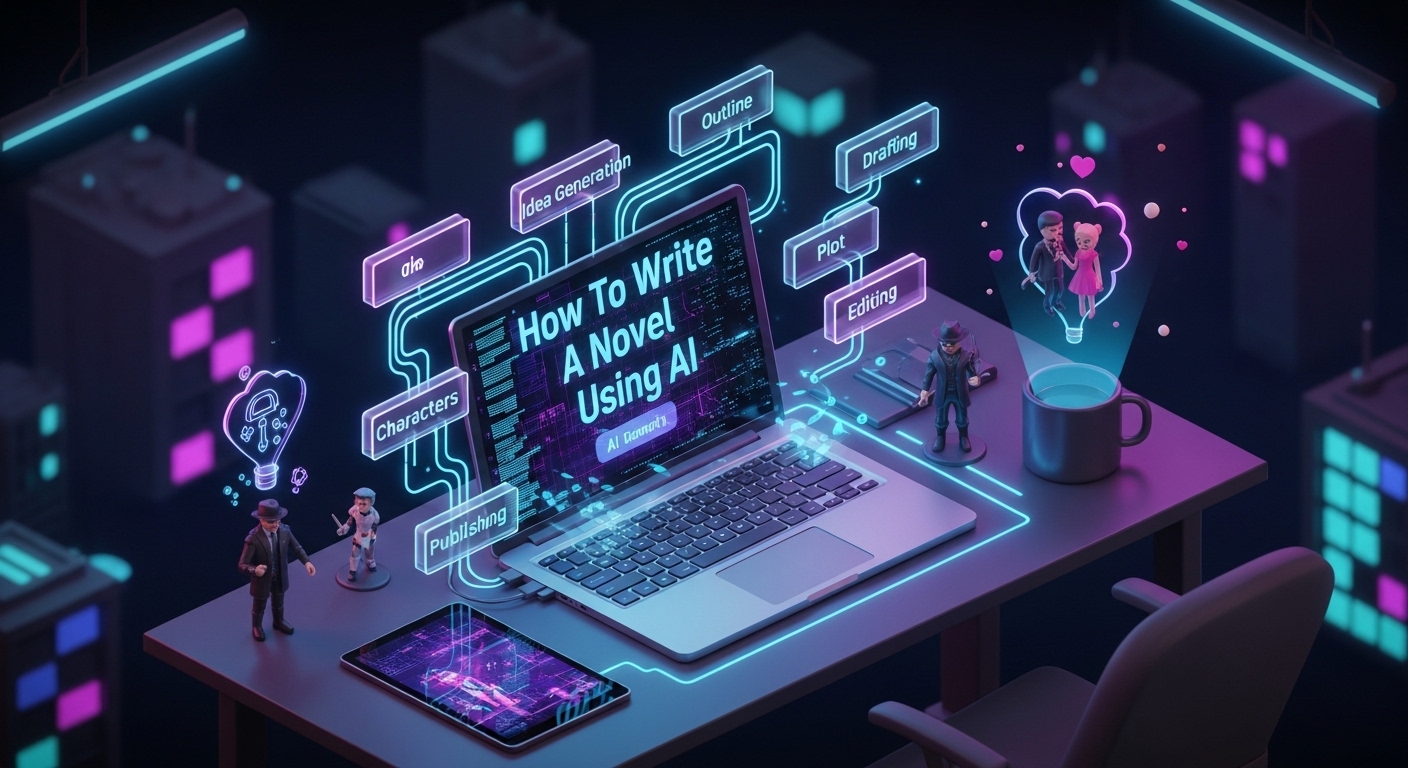
Writing a novel has traditionally been a time-consuming and labor-intensive endeavor, often taking months or even years of brainstorming, drafting, and revising. Today, artificial intelligence (AI) is transforming the way authors approach storytelling. From generating ideas and structuring plots to developing characters and even producing draft content, AI enables writers to write a novel faster, smarter, and more efficiently.
One of the most powerful ways AI can support writers is by helping with critical tasks like how to write a novel synopsis. Crafting a compelling synopsis — a concise summary that captures the essence of your story — is often one of the most challenging parts of the publishing process. AI can assist in organizing your plot points, highlighting character arcs, and summarizing your manuscript into a clear, professional, and engaging synopsis, saving you time and effort.
However, using AI effectively requires understanding its capabilities, limitations, and how it can complement your creative process rather than replace it. Whether you are a first-time author or an experienced writer, learning how to write a novel using AI and leveraging it to craft a polished synopsis can help you overcome writer’s block, clarify your story, and significantly improve your manuscript’s quality.
In this guide, we’ll explore step-by-step strategies, practical AI tools, and expert tips to help you use AI in every stage of novel writing — from conceptualization to final draft.
Why Use AI to Write a Novel?
AI offers multiple advantages for novel writing:
- Idea Generation: AI can brainstorm plot ideas, character traits, and story concepts.
- Outlining: Create structured chapter outlines or plot beats quickly.
- Drafting Assistance: Generate dialogue, descriptions, or entire scenes based on prompts.
- Editing Support: Identify grammar issues, sentence clarity, and pacing problems.
- Overcoming Writer’s Block: Get suggestions when you’re stuck in the middle of a scene.
Semantic keywords: AI storytelling, novel writing with AI, AI-assisted writing, creative writing technology, manuscript generation.
Step 1: Generate Your Novel Idea Using AI
Before you start writing, you need a strong premise. AI can help by:
- Suggesting story concepts based on genre
- Offering character backstories
- Highlighting potential conflicts and plot twists
Example: AI Idea Generation Table
| Genre | AI-Generated Plot Idea | Suggested Protagonist |
|---|---|---|
| Fantasy | A kingdom on the brink of war is threatened by a hidden magical force | Elara, a reluctant princess |
| Thriller | A journalist uncovers a government conspiracy while being hunted | Max, an investigative reporter |
| Romance | Two rival business owners fall in love while competing in a national competition | Ava and Liam, rival CEOs |
Step 2: Outline Your Novel with AI
AI can help you structure your novel step by step. You can provide your core premise, and the AI can generate:
- Chapter-by-chapter summaries
- Major plot points and subplots
- Character arcs
This ensures you have a clear roadmap before drafting, saving months of planning time.
Step 3: Use AI to Draft Scenes and Dialogue
Once your outline is ready, AI tools can help you write initial drafts:
- Generate vivid scene descriptions
- Write realistic dialogue for characters
- Create multiple versions of a scene for comparison
Important tip: Always review AI-generated content critically. AI can accelerate writing, but your voice, style, and creativity are what make the novel uniquely yours.
Step 4: Revise and Edit With AI
AI can assist with:
- Grammar and spelling corrections
- Sentence restructuring for clarity
- Pacing and flow suggestions
- Identifying overused words or clichés
AI Editing Checklist Table
| Editing Task | AI Function |
|---|---|
| Grammar & Spelling | Identify and correct errors |
| Sentence Clarity | Suggest rewording for readability |
| Pacing | Highlight slow or repetitive sections |
| Style Consistency | Ensure uniform tone and voice |
Step 5: Optimize Your Novel for Submission or Self-Publishing
AI can also assist with:
- Creating query letters and synopses
- Suggesting titles or back-cover copy
- Formatting for eBooks or print-ready files
Using AI here reduces tedious administrative work, letting you focus on creativity.
Tips for Writing a Novel Using AI
- Define Your Prompts Clearly: AI works best with specific instructions.
- Blend AI Output With Your Voice: Treat AI suggestions as drafts, not finished work.
- Use Iterative Feedback: Refine AI-generated sections multiple times.
- Fact-Check AI Content: Especially for historical or technical details.
- Combine AI Tools: Use different platforms for brainstorming, drafting, and editing.
Common Mistakes When Using AI for Novel Writing
| Mistake | Solution |
|---|---|
| Over-relying on AI | Always revise to add your personal voice |
| Vague prompts | Provide clear instructions to generate usable content |
| Ignoring plot consistency | Keep a detailed outline to track story arcs |
| Skipping manual edits | Use AI as a tool, not a substitute for human editing |
FAQs About Writing a Novel Using AI
1. Can AI write an entire novel for me?
AI can draft large sections, but human oversight is critical for coherence, style, and originality.
2. What AI tools are best for novel writing?
Popular tools include ChatGPT, Jasper, Sudowrite, and NovelAI. Each has strengths for brainstorming, drafting, or editing.
3. Will AI affect my writing voice?
If overused, yes. Always revise AI output to ensure it matches your unique style.
4. Can AI help me write faster?
Absolutely. It can generate ideas, dialogue, and scene drafts in minutes that might otherwise take hours.
5. Is it ethical to use AI for novel writing?
Yes, when you use AI as a creative assistant rather than claiming it wrote the entire book independently.
Conclusion: Blending Creativity and AI
Learning how to write a novel using AI doesn’t replace the creative process — it enhances it. From generating ideas to structuring your plot, drafting scenes, and editing efficiently, AI is a tool to help you write smarter. By combining AI technology with your storytelling skills, you can:
- Overcome writer’s block
- Accelerate your drafting process
- Maintain narrative clarity
- Ensure polished, professional output
Whether you’re aiming to write a novel in 30 days or take a more traditional timeline, AI can help you stay organized, creative, and productive. The key is balance: let AI support your workflow, but let your imagination drive the story.