
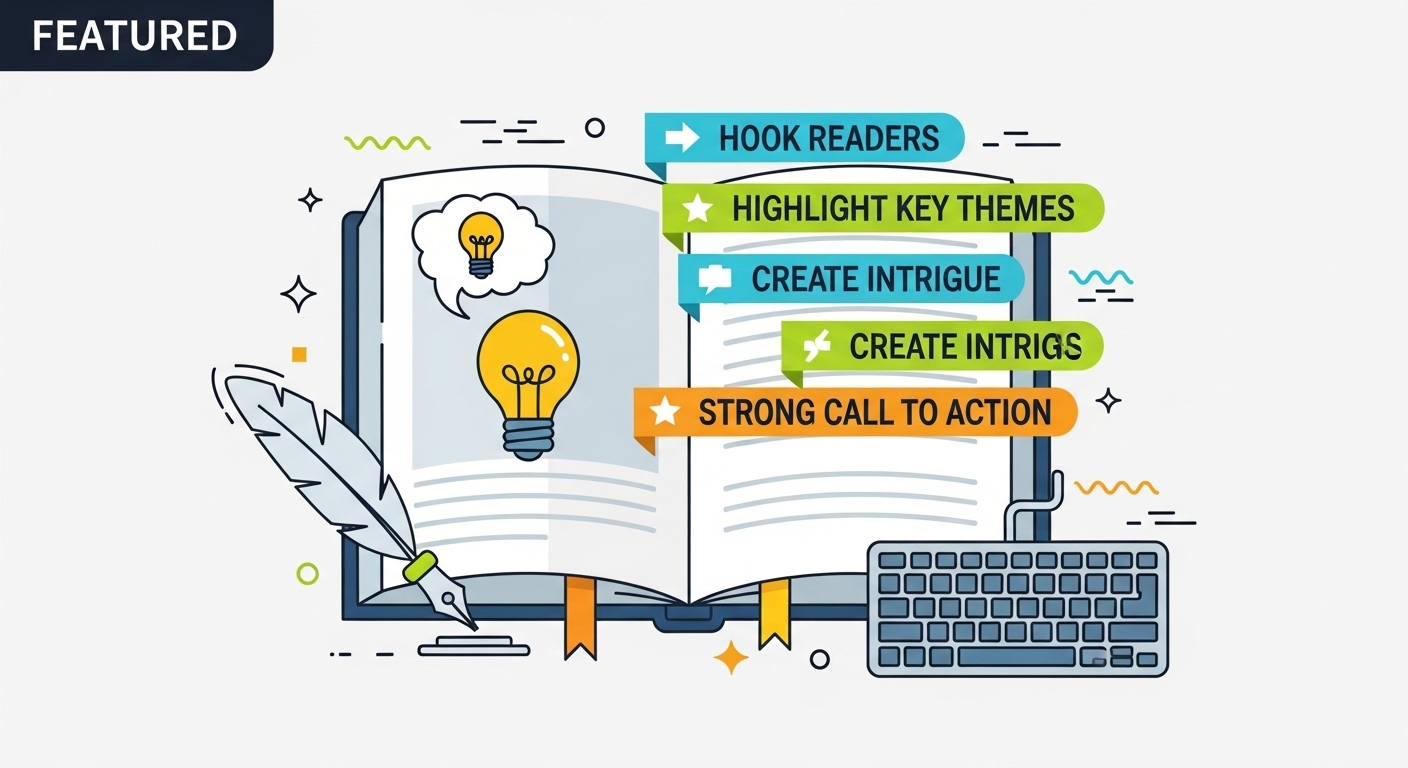
Your book description is more than a summary — it’s your sales pitch, your hook, and your first impression. In the crowded world of books, readers rarely scroll past the first few lines of your description without deciding whether your book is worth their time or money. A well-crafted description not only summarizes your story but also evokes emotion, creates curiosity, and convinces readers to take action.
If you’re an author wondering how to write a compelling book description, this guide will break it down step by step, with actionable tips, real examples, and tools to make your description irresistible — for fiction, nonfiction, and children’s books alike.
Why a Strong Book Description Is Crucial
Even if your writing is exceptional, your book may go unnoticed without a compelling description. Here’s why:
- First impressions matter: Over 70% of readers decide whether to buy a book based on the description alone.
- Conversion driver: Studies suggest that well-written book descriptions can improve sales by up to 30% on digital platforms like Amazon and Apple Books.
- Branding opportunity: A description reflects your tone, style, and professionalism. It’s your chance to connect emotionally and show readers what makes your book unique.
Think of it as the elevator pitch for your book — short, persuasive, and unforgettable.
Step 1: Understand Your Audience
Before writing, identify your ideal readers. Knowing your audience shapes every element of your description:
- Who are they (age, interests, demographics)?
- What genre do they prefer?
- What emotional triggers or desires do they have?
- What problems, fantasies, or curiosities will your book satisfy?
For example, young adult fantasy readers may respond to suspense and adventure, while nonfiction readers in self-help want practical solutions and actionable advice. Understanding your audience ensures your description speaks directly to the people most likely to buy.
Step 2: Start With a Hook That Captures Attention
The opening line is critical — it must stop readers in their tracks. There are several ways to craft a strong hook:
- Ask a provocative question: “What would you do if every memory you had was a lie?”
- Make a bold statement: “One mistake could destroy everything she loves.”
- Create suspense: “The letter arrived without a sender, but it changed her destiny forever.”
- Use an emotional trigger: “He thought he lost everything — until he discovered the one thing he couldn’t live without.”
The goal: grab attention immediately and make the reader curious enough to continue reading.
Step 3: Outline the Core Conflict
After your hook, introduce the central conflict or problem. Focus on:
- Main characters
- Obstacles they face
- Stakes involved
- Emotional tension
For fiction:
“When Emma discovers a secret society beneath her city, she must choose between protecting her family and revealing a truth that could change the world.”
For nonfiction:
“This guide helps busy professionals reclaim hours in their week, reduce stress, and achieve goals without burning out.”
Keep it concise — avoid overloading the description with unnecessary details. Think of it as selling the story, not summarizing it.
Step 4: Highlight Your Unique Selling Points
Your book description should differentiate your work from the competition. Ask:
- What makes my story or advice unique?
- Why should someone read my book instead of another in the same genre?
- What value or benefit does it provide?
For fiction:
“Unlike other thrillers, The Memory Thief blends urban adventure with historical mystery, delivering suspense, romance, and unforgettable twists.”
For nonfiction:
“This book combines cutting-edge research with practical exercises, giving readers tools they can implement immediately to improve their productivity.”
Step 5: Evoke Emotion
Emotion drives readers to take action. Words should evoke curiosity, excitement, fear, hope, or joy, depending on your genre.
- Thrillers: suspense, danger, uncertainty
- Romance: desire, connection, heartbreak
- Self-help: empowerment, motivation, transformation
- Children’s books: wonder, imagination, fun
Use strong verbs, sensory details, and emotional adjectives to make readers feel what your characters or ideas make them feel.
Step 6: Keep It Concise and Readable
A great book description is concise, punchy, and easy to scan:
- Use 3–5 short paragraphs
- Avoid complex sentences or jargon
- Use white space or bullet points for nonfiction
- End with a strong call to action
For fiction:
“One secret could destroy her family. One choice could change her destiny. Will Emma uncover the truth before it’s too late?”
For nonfiction:
“Discover actionable strategies to boost productivity, reduce stress, and reclaim your time — starting today.”
Step 7: Optimize for Keywords and SEO
If your book is sold on Amazon, Google Books, or your website, keywords are crucial:
- Identify top keywords for your genre or topic
- Include them naturally in the first 1–2 sentences
- Avoid keyword stuffing; it must read naturally
Example for self-help:
“Time management for busy professionals can feel overwhelming. Master Your Hours offers practical tips, productivity hacks, and strategies to reclaim your day.”
Keywords improve discoverability while keeping your description reader-friendly.
Step 8: Use a Call to Action
End your description with a line that encourages readers to act:
- Fiction: “Start this unforgettable journey today!”
- Nonfiction: “Grab your copy and transform your daily routine now.”
- Children’s books: “Open the pages to a magical adventure the whole family will love!”
A strong call to action increases conversions and motivates the reader to buy.
Step 9: Revise and Test
Once you have a draft:
- Read it aloud to check flow and rhythm
- Share with beta readers, writers, or colleagues for feedback
- Compare your description to bestselling books in your genre
- Refine for clarity, hook, and emotional impact
Even small tweaks — like rearranging sentences or emphasizing emotion — can dramatically improve engagement.
Step 10: Examples of Compelling Book Descriptions
Fiction Example:
“In a world where memories can be stolen, one girl fights to reclaim hers before it’s too late. Packed with adventure, mystery, and heart, The Memory Thief is a story you won’t forget.”
Nonfiction Example:
“Struggling to balance work, life, and health? The Balanced Life shows busy professionals how to create routines that boost productivity, reduce stress, and improve wellbeing — without sacrificing happiness.”
Children’s Book Example:
“Join Max the cat on a magical journey through the stars! Full of colorful illustrations and fun adventures, Max’s Cosmic Quest is perfect for ages 4–8.”
Table: Key Elements of a Compelling Book Description
| Element | Purpose | Example |
|---|---|---|
| Hook | Grab attention immediately | “One secret could destroy her family…” |
| Core Conflict | What drives the story | “…Emma must uncover the truth before it’s too late.” |
| Unique Selling Points | Differentiates your book | “Blends urban adventure with historical magic…” |
| Emotional Trigger | Evokes feelings in readers | “Suspense, romance, and hidden secrets…” |
| Call to Action | Encourages purchase | “Start the journey today — you won’t put this book down!” |
FAQs About Book Descriptions
1. How long should a description be?
- Fiction: 150–250 words
- Nonfiction: 200–300 words
- Children’s books: 100–150 words
2. Can I use humor in a description?
Yes, if it matches the tone of the book.
3. Should I include the ending?
No. Leave suspense for the reader.
4. How important are keywords?
Very — they help readers find your book online.
5. How often should I update the description?
Update for new editions, feedback, or conversion drops.
Final Thoughts
Mastering how to write a compelling book description is critical for every author. It’s the first chance to grab attention, evoke emotion, and convert browsers into buyers.
The most effective book descriptions:
- Begin with a hook
- Outline conflict and stakes
- Highlight uniqueness
- Evoke emotion
- End with a call to action
Take the time to craft your description carefully — it can be the difference between a book being noticed or ignored.