
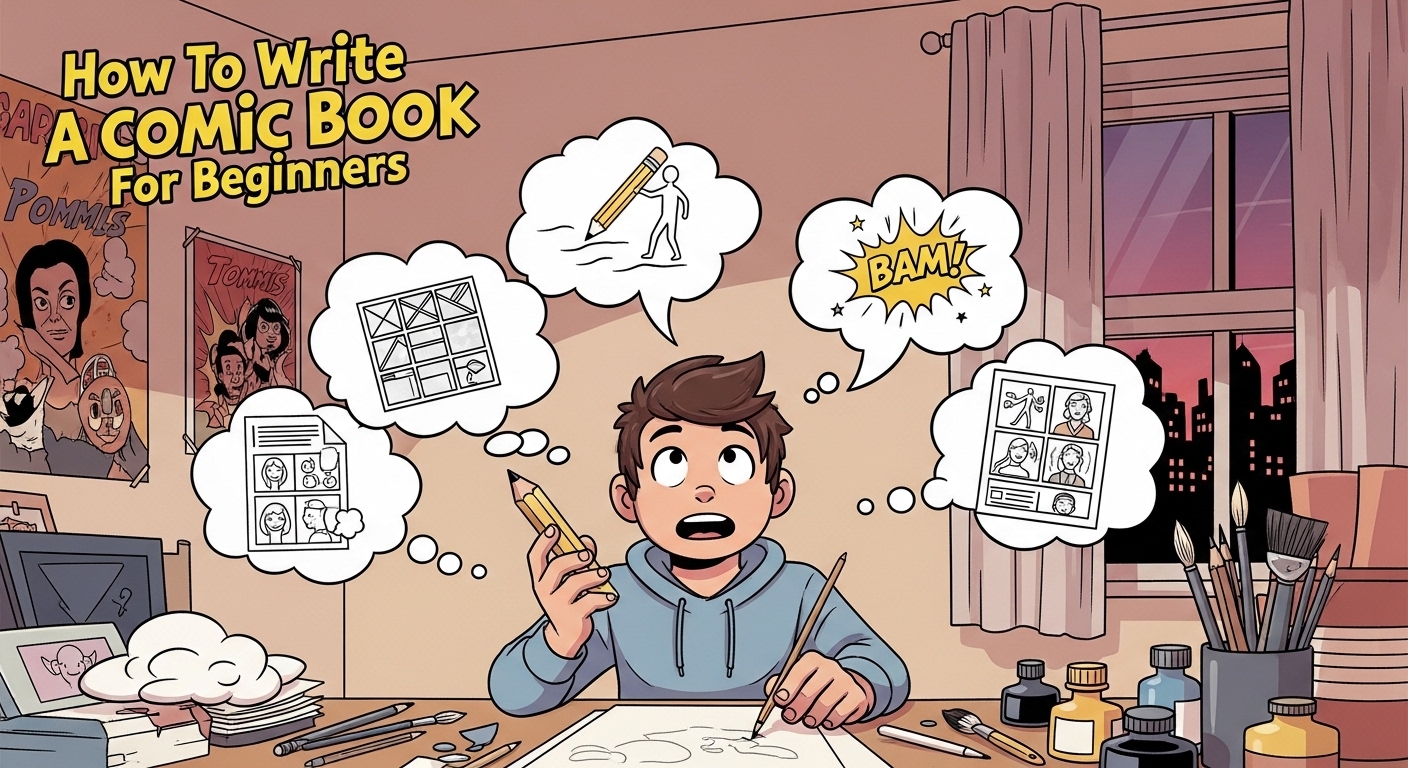
Comic books are a unique blend of visual art and storytelling, allowing writers and artists to convey stories through dialogue, narration, and illustrations. For beginners, creating a comic book can feel intimidating, but with proper planning, structure, and techniques, anyone can craft engaging stories that capture readers’ attention.
Interestingly, many of the strategies used to structure and simplify storytelling, as seen in guides like How To Write A Children’s Book For Toddlers, can also benefit comic book writers. Focusing on clear characters, concise dialogue, and visually driven narrative helps ensure your story is both entertaining and easy to follow, even for first-time authors.
This guide will teach you how to write a comic book for beginners, covering everything from idea generation, scriptwriting, panel layout, and character development to collaborating with artists and publishing your comic book.
Why Comic Books Are Unique
Comic books are different from novels or traditional stories because:
- Visual storytelling is key: The images often carry as much meaning as the text.
- Economy of words: Dialogue and narration must be concise.
- Panel pacing: Page layout and panel size influence storytelling rhythm.
- Collaboration: Many comics involve teamwork between writers, artists, letterers, and colorists.
Even as a beginner, understanding these elements ensures your story is engaging and visually dynamic.
Step 1: Define Your Comic Book Concept
Before writing, clarify the core idea:
- Genre: Superhero, slice-of-life, horror, fantasy, humor, or sci-fi
- Target audience: Children, teens, or adults
- Theme: Central conflict, lesson, or message
Example: A superhero story for teens could focus on courage and teamwork, while a slice-of-life comic for children could highlight friendship or daily adventures.
Step 2: Develop Characters
Strong characters drive your comic:
- Protagonist: Your main hero or character who drives the story
- Supporting characters: Sidekicks, mentors, or friends
- Antagonist: Villain or opposing force creating conflict
- Character traits: Keep them consistent; define appearance, personality, and motivations
Tip: For beginners, create a simple character profile sheet to keep track of details:
| Character | Role | Personality Traits | Appearance Notes | Special Abilities |
|---|---|---|---|---|
| Max | Hero | Brave, curious | Brown hair, green jacket | Can fly |
| Luna | Sidekick | Smart, funny | Short hair, glasses | Tech genius |
| Dr. Shadow | Villain | Manipulative, cunning | Dark cloak | Shadow manipulation |
Step 3: Outline the Story
Even short comics benefit from a clear outline:
- Beginning: Introduce characters and setting
- Middle: Present conflict or challenge
- Climax: Peak of action or confrontation
- End: Resolution and conclusion
Example:
| Section | Action |
|---|---|
| Beginning | Max discovers his powers |
| Middle | Dr. Shadow attacks the city |
| Climax | Max and Luna confront the villain |
| End | City is saved; Max embraces his role |
Step 4: Scriptwriting for Comic Books
Comic scripts are similar to screenplays: each page and panel is planned with text and illustration notes.
Basic Comic Script Format:
- Page #: Number of the page
- Panel #: Description of what appears visually
- Dialogue: Spoken words in speech bubbles
- Narration: Voice-over or captions
Example Script for Page 1:
- Panel 1: Max stands on a rooftop, looking at the city
- Narration: “Every city has its secrets…”
- Panel 2: A shadow looms behind Max
- Max (speech bubble): “Who’s there?”
Step 5: Plan Panel Layout and Pacing
The number of panels per page and their arrangement affects the story flow:
- 1–2 panels: Dramatic emphasis or important moments
- 4–6 panels: Standard action sequences
- Multiple small panels: Quick actions or comedic effect
Tip: Sketch thumbnails to plan each page visually before detailed art is created.
Step 6: Incorporate Dialogue and Captions
Since comic books rely on concise storytelling, every word matters:
- Keep dialogue short and natural
- Use captions for narration or inner thoughts
- Avoid overloading panels with text
- Use sound effects (“BANG,” “WHOOSH”) to enhance action
Example:
- Dialogue: “We have to stop him now!”
- Caption: “Time is running out…”
- Sound Effect: CRASH!
Step 7: Collaborate with Artists
Even if you draw your own comic, understanding collaboration is useful:
- Writers often provide scripts with panel descriptions
- Artists interpret your words visually
- Letterers add dialogue and captions professionally
- Colorists enhance mood and atmosphere
Clear communication ensures the story is consistent and visually appealing.
Step 8: Revise and Edit
Editing is crucial:
- Check dialogue for clarity and tone
- Ensure the plot is coherent and pacing works
- Verify panel descriptions match intended visuals
- Remove unnecessary text to avoid cluttered pages
Tip: Print a draft version to review the reading experience visually.
Step 9: Publishing Your Comic Book
Options include:
- Self-publishing: Platforms like Amazon KDP, ComiXology, or Lulu
- Digital publishing: Webcomics on Tapas, Webtoon, or personal websites
- Traditional publishing: Submit to comic book publishers
Format considerations: resolution, page size, color vs. black-and-white, and bleed areas for print.
Step 10: Promote Your Comic Book
- Share sketches and pages on social media
- Engage communities on Reddit, Discord, or comic forums
- Consider crowdfunding platforms like Kickstarter for initial prints
- Reach out to reviewers, bloggers, and comic conventions
Beginner-Friendly Tips for Comic Writing
- Start small: Short comic strips before a full-length book
- Use templates: Page layouts and script examples save time
- Focus on action: Comics are visual; show rather than tell
- Keep dialogue minimal: Let images do most storytelling
- Practice thumbnails: Rough sketches help plan panels efficiently
Real-World Examples
- “Bone” by Jeff Smith: Clear storytelling and expressive characters
- “Scott Pilgrim” by Bryan Lee O’Malley: Combines humor, action, and relatable characters
- “The Walking Dead” by Robert Kirkman: Demonstrates tension, pacing, and cliffhangers
Even beginners can learn from these examples to balance text, art, and pacing.
FAQs About Writing a Comic Book for Beginners
1. Do I need to be an artist to write a comic?
No. Many comic writers collaborate with illustrators or use stock assets.
2. How long should a beginner comic be?
Start with 8–20 pages. Shorter comics are easier to plan, write, and publish.
3. Can I self-publish a comic book?
Absolutely. Platforms like KDP and ComiXology make self-publishing easy.
4. Should I focus on dialogue or visuals first?
Start with a script including both. Visual descriptions guide the artist, dialogue adds personality.
5. How do I keep pacing engaging?
Vary panel sizes, use cliffhangers, and balance action with character development
Final Thoughts
Writing a comic book as a beginner is a rewarding creative process that combines storytelling, dialogue, and visuals. The key is to plan carefully: develop characters, outline your story, write a clear script, and pay attention to panel layout. By starting small, revising carefully, and collaborating when needed, you can create a comic book that captivates readers and builds your confidence as a storyteller.