
Writing a book review is more than just summarizing a story. A well-written book review analyzes the content, evaluates the author’s message, and helps readers decide whether the book is worth their time. For beginners, the process can feel overwhelming. What should you include? How critical should you be? How do you structure your thoughts clearly?
If you’ve ever finished a book and thought, “I liked it, but I don’t know how to explain why,” this guide is for you.
In this detailed beginner’s guide, you’ll learn how to write a book review in 10 practical steps. But before we move into the steps, let’s understand what a book review really is, why it matters, and what separates an average review from a powerful one.
What Is a Book Review?
A book review is a structured evaluation of a book that discusses:
- The book’s content and themes
- The author’s writing style
- Strengths and weaknesses
- Overall effectiveness
- Personal reaction and recommendation
Unlike a book report (which mainly summarizes the plot), a review includes analysis and opinion backed by evidence from the text.
For example, reviewing a novel like To Kill a Mockingbird requires more than retelling the story of Scout and Atticus. A strong review would discuss themes like racial injustice, moral courage, and childhood innocence, while evaluating how effectively Harper Lee delivers those themes.
Why Book Reviews Matter (With Real Insights)
Book reviews serve several important purposes:
1. They Help Readers Make Decisions
Studies show that over 70% of readers check reviews before purchasing books online. Reviews significantly influence buying behavior on platforms like Amazon and Goodreads.
2. They Build Critical Thinking Skills
Writing a review forces you to:
- Analyze arguments
- Identify themes
- Evaluate writing techniques
- Support opinions with evidence
These are essential academic and professional skills.
3. They Contribute to Literary Culture
Reviews shape public opinion and literary conversations. Major publications like The New York Times dedicate entire sections to book criticism because reviews influence cultural discourse.
4. They Strengthen Writing Skills
When you consistently write reviews, you improve:
- Clarity
- Structure
- Argumentation
- Persuasive writing
Now that you understand why book reviews matter, let’s look at what makes a review effective.
Characteristics of a Strong Book Review
Before jumping into the 10 steps, here are qualities every good book review should have:
- Clear structure
- Balanced opinion (not overly emotional)
- Evidence from the book
- Context about the author or genre
- Specific examples
- Engaging tone
A weak review says:
“This book was boring.”
A strong review says:
“The pacing slows significantly in the middle chapters, particularly during the extended political discussions, which may reduce engagement for readers expecting a fast-moving plot.”
See the difference? Specificity builds credibility.
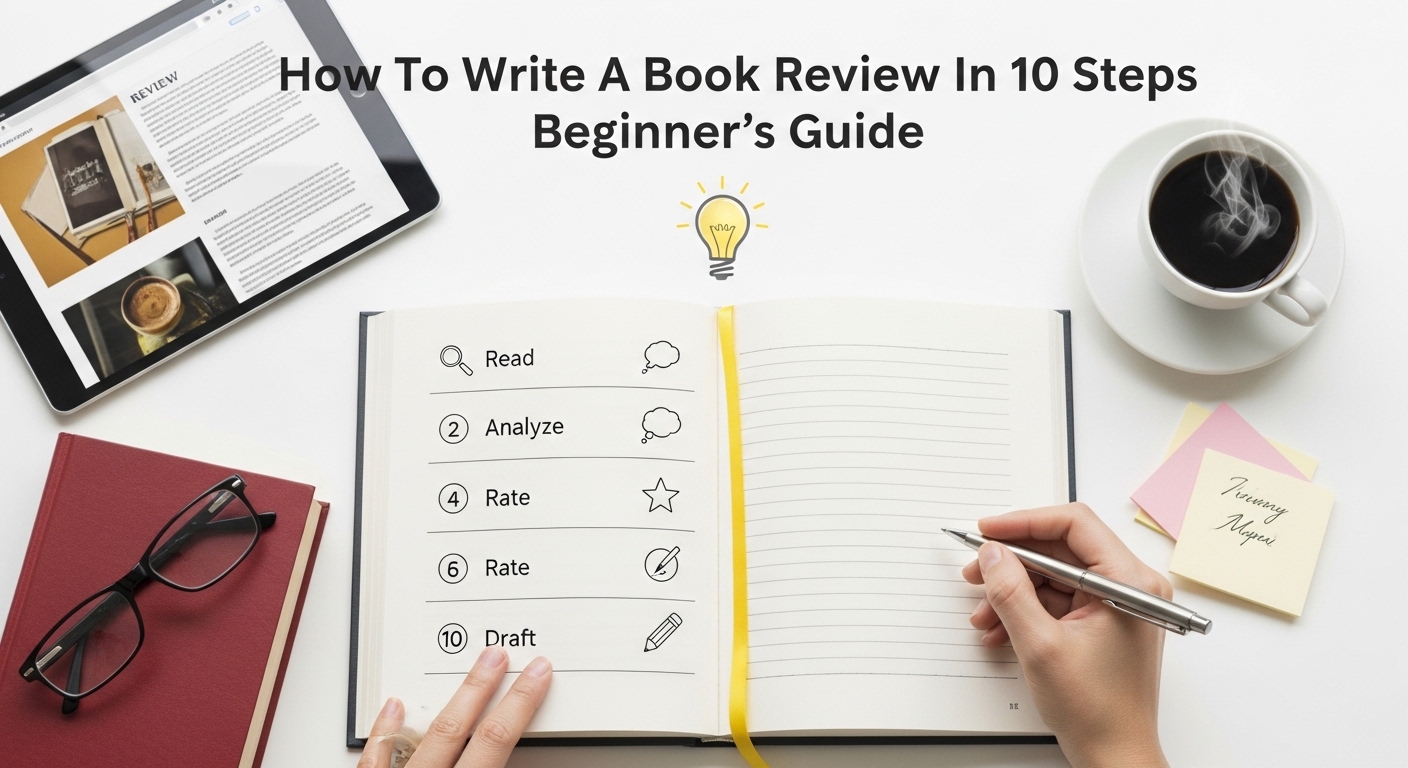
How To Write A Book Review In 10 Steps (Beginner’s Guide)
Now let’s break down the process step by step.
Step 1: Read the Book Carefully and Actively
You cannot write a strong review without reading attentively.
While reading:
- Highlight important passages
- Note confusing sections
- Mark emotional reactions
- Identify recurring themes
Ask yourself:
- What is the author trying to say?
- Who is the target audience?
- What stands out most?
If reviewing a complex book like 1984 by George Orwell, you would need to pay close attention to symbolism, political themes, and dystopian world-building.
Step 2: Research the Author and Context
Understanding background adds depth to your review.
Look into:
- The author’s background
- Historical context
- Genre conventions
- Previous works
For instance, reviewing Pride and Prejudice requires understanding 19th-century British society and marriage norms shaped by Jane Austen’s era.
Context strengthens your evaluation.
Step 3: Identify the Book’s Main Argument or Theme
Every book communicates something.
Ask:
- What is the central message?
- What issues does it address?
- What question does it answer?
Nonfiction books may present a thesis.
Fiction often explores deeper themes beneath the plot.
Write this clearly in one or two sentences before drafting your review.
Step 4: Write a Brief but Engaging Summary
Your summary should:
- Introduce the setting
- Present key characters
- Outline the main conflict
- Avoid spoilers
Keep it concise. A good rule: the summary should not exceed 25–30% of your review.
Example (without spoilers):
The novel follows a young protagonist navigating a rigid and oppressive society while questioning authority and truth.
The goal is context, not retelling.
Step 5: Analyze the Writing Style
Now move beyond summary.
Evaluate:
- Tone
- Language complexity
- Dialogue quality
- Pacing
- Structure
Is the writing descriptive or minimalist?
Is it fast-paced or slow?
For example, compare the lyrical prose of The Great Gatsby by F. Scott Fitzgerald to modern commercial fiction. Style affects reader experience.
Step 6: Evaluate Strengths
Be specific.
Strengths may include:
- Strong character development
- Unique plot
- Emotional impact
- Research depth
- Clear arguments
Instead of:
“The characters were good.”
Say:
“The protagonist’s internal conflict is portrayed with psychological depth, particularly in the final chapters.”
Step 7: Discuss Weaknesses (Respectfully)
A balanced review builds trust.
Possible weaknesses:
- Predictable plot
- Slow pacing
- Repetitive arguments
- Underdeveloped characters
Criticism should be constructive, not insulting.
Avoid:
“The author has no idea what they’re doing.”
Instead:
“The middle section becomes repetitive, which slightly weakens the book’s momentum.”
Step 8: Compare It to Similar Books
Comparison gives readers perspective.
If reviewing a dystopian novel, you might compare it to The Hunger Games by Suzanne Collins.
Ask:
- Is it more character-driven?
- More politically focused?
- Darker or lighter in tone?
Comparison adds analytical depth.
Step 9: Support Opinions with Evidence
Quote short passages when necessary.
For example:
The line “Big Brother is watching you” reinforces the atmosphere of constant surveillance.
Evidence makes your review persuasive and credible.
Step 10: Conclude with a Clear Recommendation
End your review by answering:
- Who should read this book?
- Who might not enjoy it?
- Is it worth the time?
You can also give a rating (optional), but explanation matters more than stars.
Example:
This book is ideal for readers who enjoy thought-provoking political fiction, though those seeking light entertainment may find it intense.
Common Mistakes Beginners Make
Avoid these errors:
- Writing only summary
- Giving extreme praise without explanation
- Being overly harsh
- Including spoilers
- Not proofreading
A review should inform, not rant.
Sample Structure for a Book Review
Here’s a simple structure you can follow:
- Introduction (Hook + Book details)
- Short summary
- Analysis of themes
- Evaluation of writing style
- Strengths
- Weaknesses
- Comparison
- Conclusion + Recommendation
This framework works for both academic and casual reviews.
FAQs About Writing a Book Review
1. How long should a beginner’s book review be?
For school assignments, 500–1000 words is common.
For blogs, 1000–2000+ words provides more depth and SEO value.
2. Can I include my personal opinion?
Yes. A review must include opinion—but it should be supported with reasons and examples.
3. Should I include spoilers?
Generally, no. If necessary, clearly warn readers before revealing major plot points.
4. What is the difference between a book report and a book review?
A book report summarizes content.
A book review evaluates and analyzes it.
5. How do I start a book review?
Start with:
- A thought-provoking question
- A bold statement
- A brief comment about the theme
- Or a short overview of the book’s significance
Example:
Few novels capture moral courage as powerfully as this timeless classic.
Final Thoughts
Writing a book review is a skill that improves with practice. The more you read and analyze, the sharper your insights become.
Remember:
- Read carefully
- Think critically
- Write clearly
- Support opinions
- Stay balanced
A strong book review doesn’t just describe a book—it interprets it. It helps readers see the text from a new angle and decide whether it deserves a place on their shelf.
If you follow these 10 steps consistently, you won’t just write better reviews—you’ll become a more thoughtful reader and a stronger writer overall.