
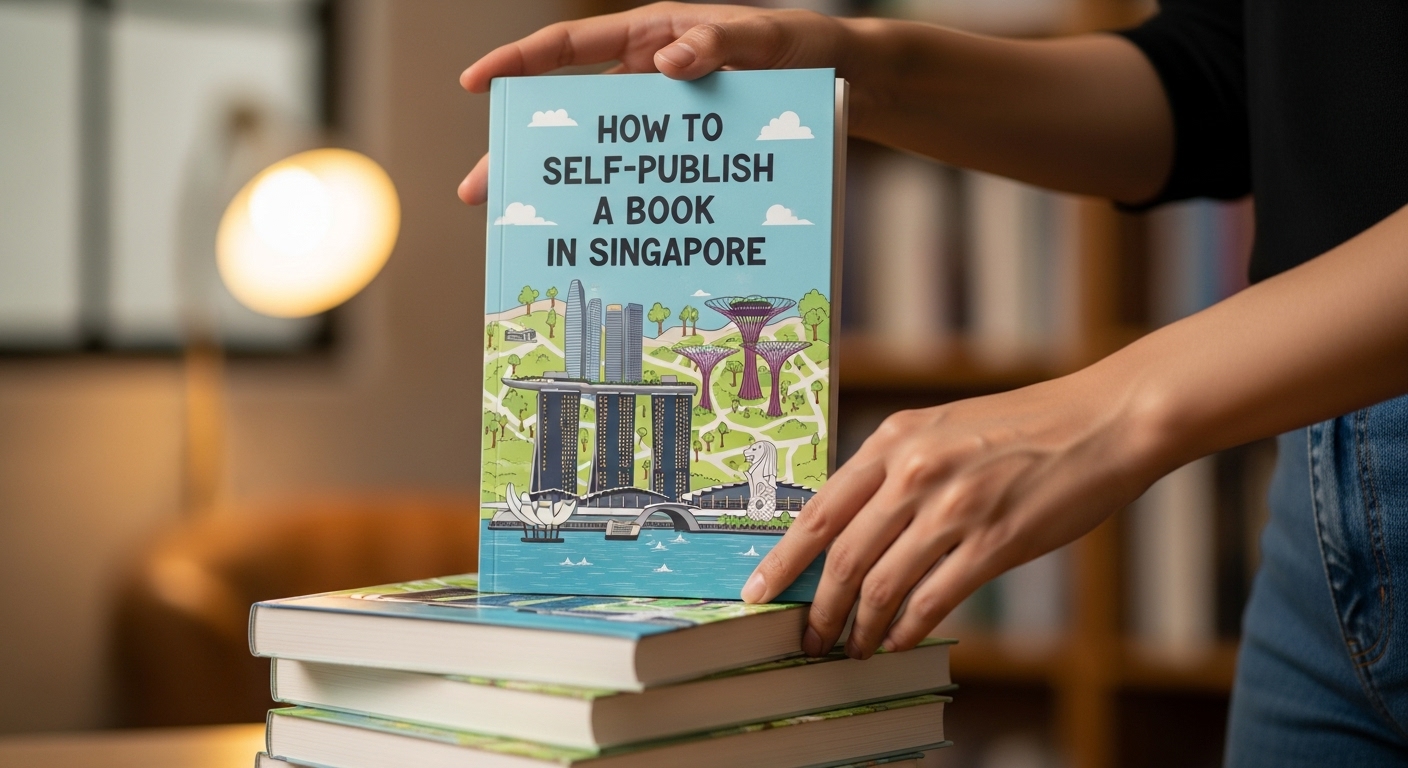
Self-publishing a book in Singapore has become a realistic and rewarding option for writers, creatives, and professionals looking to share their stories or expertise. Unlike traditional publishing, which can be slow, selective, and limiting, self-publishing gives you complete control over your book—content, design, pricing, and marketing. For anyone wondering How To Self-Publish A Book In Singapore, the process is now easier than ever thanks to local print-on-demand services, online marketplaces, and digital platforms.
But publishing a book is only the beginning. If your goal is to make money from self-publishing in Singapore, it requires careful planning, strategy, and persistence. From choosing the right book format—whether print, eBook, or hybrid—to creating an appealing cover, optimizing metadata, and planning distribution, every step influences whether your book becomes a success.
For authors in the UAE, the self-publishing landscape is growing rapidly as well. Cities like Dubai and Abu Dhabi have seen a surge in independent authors and digital platforms, making it possible to reach both regional and international audiences. Learning how to self-publish in the UAE involves understanding local cultural preferences, navigating printing and distribution options, and leveraging online marketplaces like Amazon or regional platforms such as Jamalon. Just like in Singapore, marketing, pricing, and positioning play a critical role in turning your book into a profitable venture.
This guide will walk you through everything you need to know to self-publish a book in Singapore, provide insights for the UAE market, and include practical tips, insider strategies, and actionable advice. Whether you’re targeting readers locally, regionally, or globally, mastering these steps will help you turn your manuscript into a professional, market-ready book that can generate sustainable income.
Why Self-Publishing Singapore Is Growing
Singapore’s self-publishing industry has expanded significantly over the past decade. Several factors make it an attractive option:
- Access to print-on-demand (POD) services Singapore that reduce upfront costs
- Local printers with high-quality production and fast turnaround
- Global online marketplaces enabling international distribution
- A strong culture of reading, entrepreneurship, and niche markets
Whether you’re writing fiction, nonfiction, or specialized content, Singapore offers an ecosystem that allows authors to publish their own book Singapore and potentially earn money.
Self-publishing also allows authors to retain full rights to their work, unlike traditional publishing where royalties and control are limited.
Step 1: Prepare and Polish Your Manuscript
The foundation of a profitable book is a well-prepared manuscript. This is where many self-published authors fall short.
- Editing: Hire a professional editor to ensure your manuscript is polished and error-free.
- Proofreading: Catch minor mistakes that can distract readers.
- Structure: Make sure chapters flow logically, especially for nonfiction where clarity and ease-of-use matter most.
A clean, professional manuscript not only boosts credibility but also increases the likelihood of positive reviews and repeat sales—critical factors for making money self-publishing Singapore.
Step 2: Define Your Book Format
Your choice of format affects production, distribution, and profitability. In Singapore, common options include:
- Print Books: Hardcover or paperback. Popular among readers who value physical books and ideal for gifts, coffee-table books, and educational content.
- eBooks: Ideal for cost-effective global distribution. eBooks allow instant sales without printing costs.
- Hybrid (Print + eBook): Combines both for maximum reach and revenue.
Many successful authors in Singapore start with a print-on-demand Singapore service to reduce costs while testing the market before committing to larger print runs.
Step 3: Register an ISBN in Singapore
If you plan to sell your book in stores, online marketplaces, or libraries, an ISBN is essential. Singapore’s National Library Board (NLB) issues ISBNs. Each format of your book—paperback, hardcover, or eBook—requires a separate ISBN.
Benefits of an ISBN:
- International recognition and easier cataloging
- Enables sales through bookstores and libraries
- Increases professional credibility
Once registered, you must submit a copy to the National Library for legal deposit. This step is crucial if you want your book to be taken seriously and reach a broader audience.
Step 4: Design Your Book Layout
A professional-looking book layout can make a huge difference in perceived value.
- Use consistent fonts, margins, and spacing
- Include page numbers and chapter headings
- Consider full-bleed pages for images or charts
- Ensure eBooks are responsive across devices
A clean layout ensures readers focus on your content, not formatting issues. In Singapore, local designers are available who specialize in self-published book layouts, helping your book appear polished and professional.
Step 5: Design a Professional Book Cover
Your book cover is the first thing readers notice. A compelling cover can significantly boost sales.
Tips for designing a cover:
- Make it genre-appropriate and visually appealing
- Ensure readability even at thumbnail size online
- Use colors, typography, and imagery that resonate with your target audience
- Avoid clutter; simplicity often wins
Many Singaporean self-published authors hire freelance designers to achieve a cover that appeals locally and internationally, increasing their chances of success.
Step 6: Printing Your Book in Singapore
Choosing the right printing method affects both cost and quality. Singapore offers multiple options:
- Print-on-Demand Singapore (POD): Print copies only when orders are placed. Minimal upfront cost, ideal for first-time authors or small print runs.
- Offset Printing: Better for larger runs. Offers lower per-unit cost and higher quality for hardcover or coffee-table books.
Always request sample copies to verify color accuracy, binding quality, and paper finish. This step ensures your book meets professional standards before reaching readers.
Step 7: Pricing Your Book
Pricing can make or break your book’s profitability. Set a price that balances affordability and perceived value.
Consider:
- Production costs (printing, editing, design)
- Genre expectations and similar books in the market
- Audience demographics and purchasing power
- Format (hardcover, paperback, or eBook)
A higher-quality book justifies higher pricing. For self-publishing Singapore, pricing your book strategically increases both revenue and credibility.
Step 8: Distribution Channels in Singapore
Distribution determines how readers access your book. Options include:
- Online marketplaces: Local and international platforms expand reach.
- Bookstores: Some independent bookstores accept self-published titles on consignment.
- Direct sales: Selling at events, workshops, or via social media provides higher profit margins.
Combining multiple channels maximizes reach and revenue potential, helping authors make money self-publishing Singapore.
Step 9: Marketing Your Self-Published Book
Marketing is key to converting readers into buyers. Successful marketing is about relevance, not noise.
Strategies include:
- Building an author brand through social media
- Sharing your journey and book’s story
- Hosting book launches and events
- Collaborating with local influencers or bloggers
- Engaging with niche communities in Singapore
Marketing consistently over time can generate sustained sales rather than relying solely on launch-day success.
Step 10: Protecting Your Work
Copyright in Singapore is automatic once your work is created. However, registering your copyright strengthens your legal protection against plagiarism or unauthorized distribution.
Benefits of copyright registration:
- Confirms ownership
- Protects against infringement
- Adds credibility when selling or licensing your book
This step is particularly important for authors producing educational, professional, or high-value creative content.
Advanced Tips for Making Money Self-Publishing in Singapore
- Bundle your book with related services: Offer workshops, consulting, or online courses that complement your book.
- Limited editions: Create collector or signed editions for higher margins.
- Corporate or bulk sales: Companies may purchase books for training or gifting, offering a lucrative revenue stream.
- Leverage your network: Partner with local organizations, schools, and community groups.
- Build an email list: Direct communication with readers increases repeat sales and engagement.
By thinking beyond just the book itself, authors can generate multiple income streams from a single title.
Frequently Asked Questions (FAQs)
1. Can I self-publish a book in Singapore without a publisher?
Yes. Self-publishing allows you to publish your own book Singapore independently, through online platforms, POD services, or direct sales.
2. How do I get an ISBN in Singapore?
ISBNs are issued by the National Library Board (NLB). Each format—hardcover, paperback, or eBook—requires a separate ISBN.
3. Can I sell my self-published book internationally?
Absolutely. Using online marketplaces or POD services, you can reach readers globally while printing locally or regionally.
4. How much does it cost to self-publish a book in Singapore?
Costs vary depending on editing, design, printing, and marketing. POD reduces upfront costs, while large print runs lower the cost per unit.
5. How can I make money from self-publishing in Singapore?
Profitable books rely on strategic pricing, effective marketing, direct sales, bulk purchases, workshops, or supplementary services tied to the book.
Final Thoughts
Self-publishing a book in Singapore is more accessible than ever, but success requires careful planning and strategic thinking. From manuscript preparation to design, printing, distribution, and marketing, every step influences whether your book will not only reach readers but also generate income.
By treating your book as both a creative work and a product, you can publish your own book Singapore, grow your audience, and potentially make money self-publishing Singapore.
With patience, dedication, and professional preparation, your self-published book can become a rewarding creative and financial asset.