
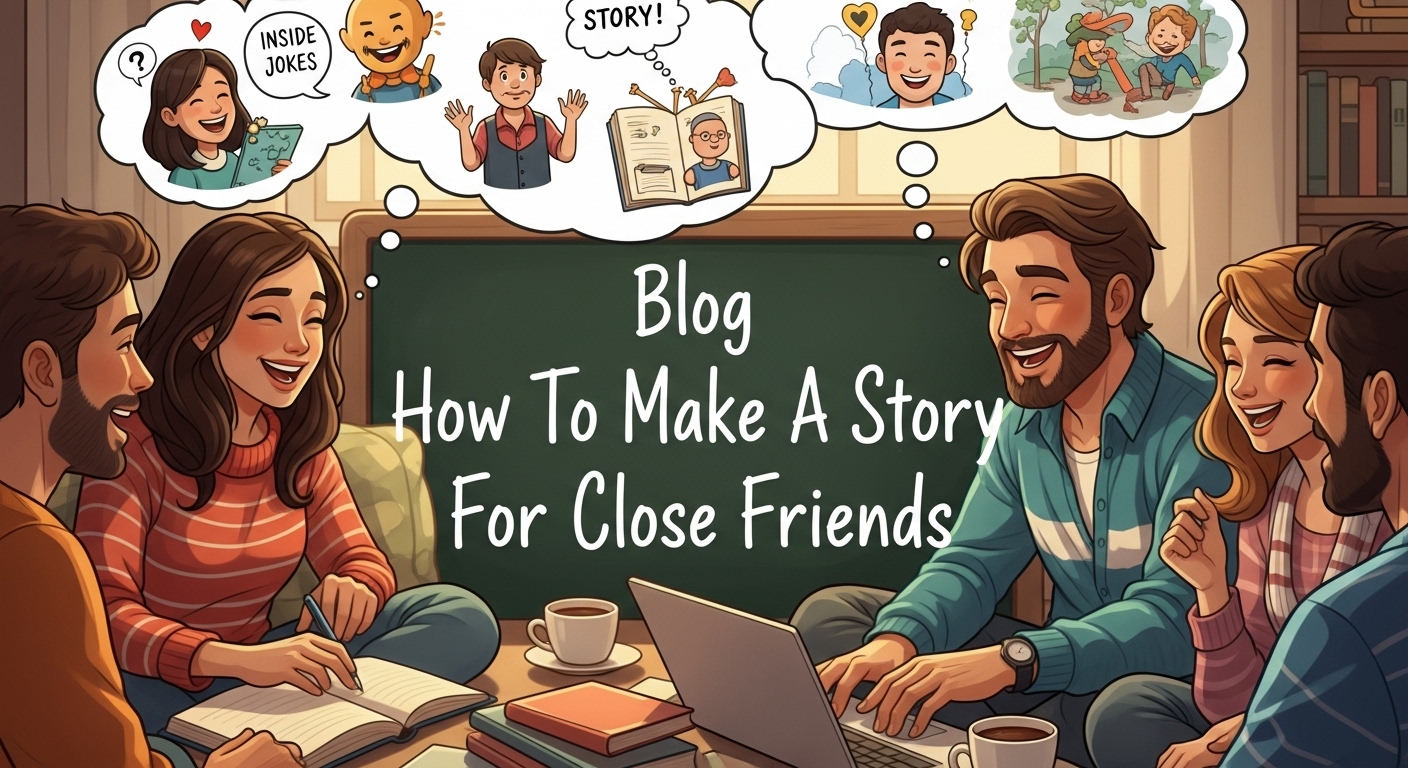
Friendship is one of life’s most treasured connections. Close friends share laughter, tears, inside jokes, and unforgettable experiences that form the foundation of lifelong memories. Capturing this unique bond in a story is both a creative and emotional journey, allowing you to preserve memories, express gratitude, and celebrate your friendships in a meaningful, personalized way.
Writing a story for friends isn’t just about recording events—it’s about creating an engaging narrative that reflects emotions, shared experiences, and the essence of your relationship. From brainstorming ideas and developing characters to weaving in humor, sentiment, and personal anecdotes, every step contributes to a story that resonates deeply.
This guide will walk you through how to make a story for close friends with practical, step-by-step instructions, including tips on plot development, character creation, emotional storytelling, and presentation. Whether the story is intended as a heartfelt gift, a nostalgic keepsake, or a creative surprise, these strategies ensure it is thoughtful, polished, and memorable.
Additionally, for those interested in expanding their writing skills and exploring children’s literature, this guide draws inspiration from How To Make A Kids’ Book: Writing, Illustrating & Publishing Tips, offering insight into structuring narratives, integrating illustrations, and preparing stories for publication. By applying these creative techniques, you can craft a story that is not only emotionally impactful for friends but also serves as a foundation for future writing projects, including children’s books, short stories, or personal journals.
Why Writing a Story for Close Friends Matters
Creating a story for friends is not just about storytelling—it’s about celebrating your shared journey. Unlike general fiction, these stories carry emotional weight and personal significance.
Emotional Benefits
- Strengthens friendship bonds
- Preserves meaningful memories
- Helps express feelings often left unspoken
- Provides a keepsake that can be revisited years later
Creative Benefits
- Enhances writing and narrative skills
- Encourages reflection and self-expression
- Allows experimentation with different storytelling styles
By writing for friends, you create something that goes beyond words—a treasured memory.
Step 1: Clarify Your Purpose and Theme
Before starting your story, define why you are writing it. Every story is stronger when it has a clear purpose and a central theme.
| Purpose | Description | Examples |
| Celebration | Highlighting a milestone or friendship anniversary | “The Year We Conquered Everything Together” |
| Nostalgia | Preserving shared memories | “Our Summer Adventures” |
| Gratitude | Expressing appreciation | “Why I’m Thankful for You” |
| Humor | Making friends laugh and reminisce | “The Time We Almost Got Caught” |
| Reflection | Sharing lessons learned together | “How We Grew Side by Side” |
Choosing a purpose helps guide tone, content, and style. A humorous story will have a different structure than a reflective one.
Step 2: Decide the Story Style
Stories for friends don’t need to follow conventional literary formats. The style should match your relationship and the memories you want to convey.
Popular Story Styles
| Style | Best For | Features |
| Memory-based narrative | Everyday experiences | Real events, emotional authenticity |
| Fictionalized story | Adding humor or adventure | Characters inspired by friends, exaggerated events |
| Letter-style story | Direct emotional expression | Personal, heartfelt, conversational |
| Diary or journal format | Reflections over time | Chronological entries, introspection |
| Short illustrated story | Younger friends or creative keepsake | Simple plot, visuals, quotes, or doodles |
Choosing the right style ensures your story feels personal and engaging.
Step 3: Brainstorm Shared Memories
The heart of a story for close friends lies in shared experiences. Start by listing all the moments that have shaped your friendship.
Examples of Memories to Include
- First meetings or how you became friends
- Inside jokes only your group understands
- Trips, parties, or events you attended together
- Support during tough times
- Fun traditions or rituals unique to your friendship
Tip: Choose 3–5 meaningful moments to focus on. This allows the story to have depth without feeling rushed or cluttered.
Step 4: Build Characters Inspired by Friends
Characters in your story can either mirror your friends directly or be playful versions of them. The goal is to capture personalities, quirks, and dynamics.
Character Development Checklist
- Name or nickname (real or fictionalized)
- Distinct personality traits
- Quirks or habits that stand out
- Roles within the friend group
- Emotional strengths and weaknesses
Example:
If your friend is always the practical one, show them making a humorous plan to solve a problem in the story.
Strong characters make your story relatable, humorous, and memorable.
Step 5: Structure Your Story Effectively
A well-structured story ensures your friends stay engaged and emotionally invested. Keep it simple. A standard structure works best:
| Section | Purpose | Tips |
| Beginning | Set the scene, introduce friends and context | Start with a fun memory or emotional hook |
| Middle | Share shared experiences, challenges, or adventures | Include dialogue, humor, and emotional moments |
| Ending | Reflect on the friendship, lessons, or gratitude | Leave your friends feeling valued and nostalgic |
Pro Tip: Use transitions between memories to make the story flow naturally. Phrases like “Do you remember when…” or “That time we…” work perfectly for personal narratives.
Step 6: Incorporate Emotions Subtly
Emotions make stories memorable. The key is to show, not tell.
- Instead of saying, “I was happy,” describe a moment:
“I laughed so hard I nearly fell off the swing when you told that ridiculous story.”
- Highlight shared laughter, support, or pride in your friends’ achievements
- Include moments of conflict or misunderstanding to make the story authentic
This approach makes your story relatable and heartfelt without being preachy.
Step 7: Use Conversational and Natural Language
A story for close friends should read like a conversation, not a formal novel.
- Write as if you’re speaking directly to your friends
- Use inside jokes, familiar phrases, or slang you all use
- Keep sentences short, lively, and rhythmic
- Add humor where appropriate
Tip: Reading the story aloud while writing helps maintain a natural, friendly tone.
Step 8: Add Personal Touches
Personal touches make your story distinct and irreplaceable.
Consider including:
- Favorite phrases or quotes from your friends
- Locations that hold shared memories
- Songs, food, or hobbies that are meaningful
- Illustrations, doodles, or photos
These details make your story interactive and nostalgic—something your friends will want to keep forever.
Step 9: Make It Visual (Optional but Recommended)
Even a text-heavy story benefits from visual elements, especially for stories intended as gifts.
- Include handwritten notes or illustrations
- Add photos from real memories
- Use colorful formatting or borders for special pages
Visual elements enhance emotional impact and make the story feel personal.
Step 10: Review and Edit Thoughtfully
Editing is crucial, even for a story meant for friends.
- Check for spelling, grammar, and readability
- Ensure timelines make sense
- Confirm that jokes and references are clear to your audience
- Ask a trusted friend (outside the circle) to proofread if needed
A polished story shows effort and care, making it even more special.
Step 11: Share Your Story
How you share your story depends on your relationship and the occasion. Some options include:
| Method | Pros | Cons |
| Handwritten booklet | Personal, nostalgic | Time-consuming |
| Printed book | Durable keepsake | Costs involved |
| Digital PDF | Easy to share | Less tactile |
| Read aloud during a gathering | Emotional, memorable | Limited to one event |
Tip: If possible, add a personal note or signature at the end. Small gestures like this amplify the emotional impact.
Reflection Questions to Guide Your Story
Brainstorming with reflection questions is one of the most effective ways to ensure your story captures meaningful moments rather than just random events. These questions encourage you to pause, think deeply, and relive experiences with your friends. By reflecting first, you can identify the moments that are funny, emotional, or transformative—the ones that will make your story memorable.
Here are some detailed reflection questions and tips on how to use them:
What is our funniest shared memory?
Think of moments where everyone laughed uncontrollably. It could be a small mishap during a trip, a silly misunderstanding, or an inside joke that still makes you smile. Including these moments brings lightness and humor to your story.
Which moment made you feel proud of our friendship
Reflect on situations where your friends supported you, stood by you during challenges, or celebrated your achievements. Highlighting these moments emphasizes the depth and loyalty in your friendship.
Who has played the biggest role in supporting each other?
dentifying the supportive friends and describing their actions adds emotional resonance. For example, recounting how a friend stayed up late to help you study or cheered you on during a tough time makes the story personal and heartfelt.
What inside joke or phrase defines our friendship?
Inside jokes give your story a unique voice. Even if others don’t fully understand, including them strengthens the bond and makes the story authentic.
How has our friendship changed or grown over time?
Reflect on challenges you’ve overcome together or milestones that marked your growth. Showing evolution in your friendship makes your story dynamic and meaningful rather than just a list of memories.
Pro Tip: Write down your answers first, then circle the moments that feel the most emotionally significant. These will form the backbone of your story.
Examples of Story Ideas for Close Friends
Sometimes brainstorming real-life events can be overwhelming, so using story templates or themes can help you get started. Here are some detailed examples with ideas on how to expand them:
The Adventure That Went Wrong”
- Focus on a trip, a school event, or a day out where everything didn’t go as planned.
- Highlight how everyone reacted, the humor in the chaos, and the eventual resolution.
- Include funny dialogue or exaggerated reactions to bring the story to life.
“Our Midnight Talks”
- Capture late-night conversations, secrets shared, or moments of vulnerability.
- Emphasize emotions, dreams, and inside thoughts.
- You can structure this like a series of vignettes, each representing a key conversation.
“The Summer We Discovered Everything”
- Chronicle a trip, a camp, or a vacation that left a lasting impression.
- Include sensory details—what you saw, heard, or tasted—to make your story immersive.
Reflect on how the experience shaped your friendship and what you learned about each other.
“Inside Jokes Only We Understand”
- Compile humorous moments, pranks, and silly misunderstandings.
- Consider pairing each anecdote with a small illustration or a caption to enhance nostalgia.
- This type of story works especially well as a short, playful keepsake that friends can laugh at repeatedly.
“The Moments We Overcame Together”
- Highlight challenges you faced as a group: academic stress, personal struggles, or difficult situations.
- Show resilience, loyalty, and teamwork.
- These stories leave a lasting impact by celebrating friendship beyond fun times.
Tip: You can combine these story types in one narrative—begin with humor, then add reflective moments, and finish with gratitude. This creates a well-rounded story that is fun, emotional, and memorable.
Final Tips for Writing a Heartfelt Story
Writing for close friends is about honesty, authenticity, and shared experiences. Here’s a detailed guide to crafting a story that truly resonates:
Keep the story personal and authentic
Avoid clichés or generic anecdotes. Use real moments and genuine feelings. Friends will appreciate the sincerity more than polished perfection.
Focus on quality over quantity of memories
Rather than including every event, choose a few moments with the strongest emotional impact. Each page should have purpose—whether it makes readers laugh, reflect, or feel nostalgic.
Balance humor and emotion
A good story for friends mixes lighthearted moments with emotional reflections. Laughter and sentiment should complement each other, making the story enjoyable yet touching.
Make it readable aloud for maximum impact
Stories shared with friends are often read or presented verbally. Use conversational language, short sentences, and natural dialogue. This makes your narrative feel like a personal conversation.
Reflect the uniqueness of your friendship
Include inside jokes, shared quirks, and familiar locations. These details make the story exclusive to your friendship circle, turning it into a cherished keepsake.
Consider the format and presentation
- Handwritten journals or booklets feel intimate.
- Digital stories with images or illustrations are easy to share.
- Adding doodles, photos, or captions enhances the emotional and visual impact.
End with gratitude or reflection
Finish your story by expressing how much the friendship means to you, what you’ve learned together, or hopes for the future. A strong ending leaves a lasting emotional impression.
Bonus Tip: Turn Your Story Into a Keepsake
To make your story even more special, consider compiling it into a small booklet, scrapbook, or digital PDF. Include:
- Illustrations of shared memories
- Photographs of events mentioned in the story
- Decorative pages with quotes or inside jokes
- A handwritten note or dedication at the end
This approach transforms your story into a gift your friends can revisit anytime they want to relive those moments.
A well-crafted story becomes more than a piece of writing—it becomes a shared treasure.
Frequently Asked Questions (FAQs)
1. Can I write a story for friends even if I’m not a good writer?
Absolutely. Your friends value honesty and emotion more than literary perfection. Focus on authenticity rather than fancy words.
2. How long should the story be?
Stories for close friends can be short (2–3 pages) or long (20+ pages). The key is depth, not length.
3. Should I include real names or fictionalize them?
Both work. Using real names feels personal; fictional names allow playful exaggeration.
4. Can I make it humorous?
Definitely. Humor is a great way to reflect shared experiences and bring your story to life.
5. Is it okay to include past conflicts or disagreements?
Yes, if handled carefully. Honest reflection can make the story more relatable and meaningful.
Conclusion
Learning how to make a story for close friends is a creative journey that blends memory, emotion, and expression. A story written thoughtfully becomes a lasting keepsake, a source of nostalgia, and a way to celebrate the bond you share.
When done right, your story will make your friends laugh, smile, and maybe even shed a tear—a testament to a friendship worth treasuring.