
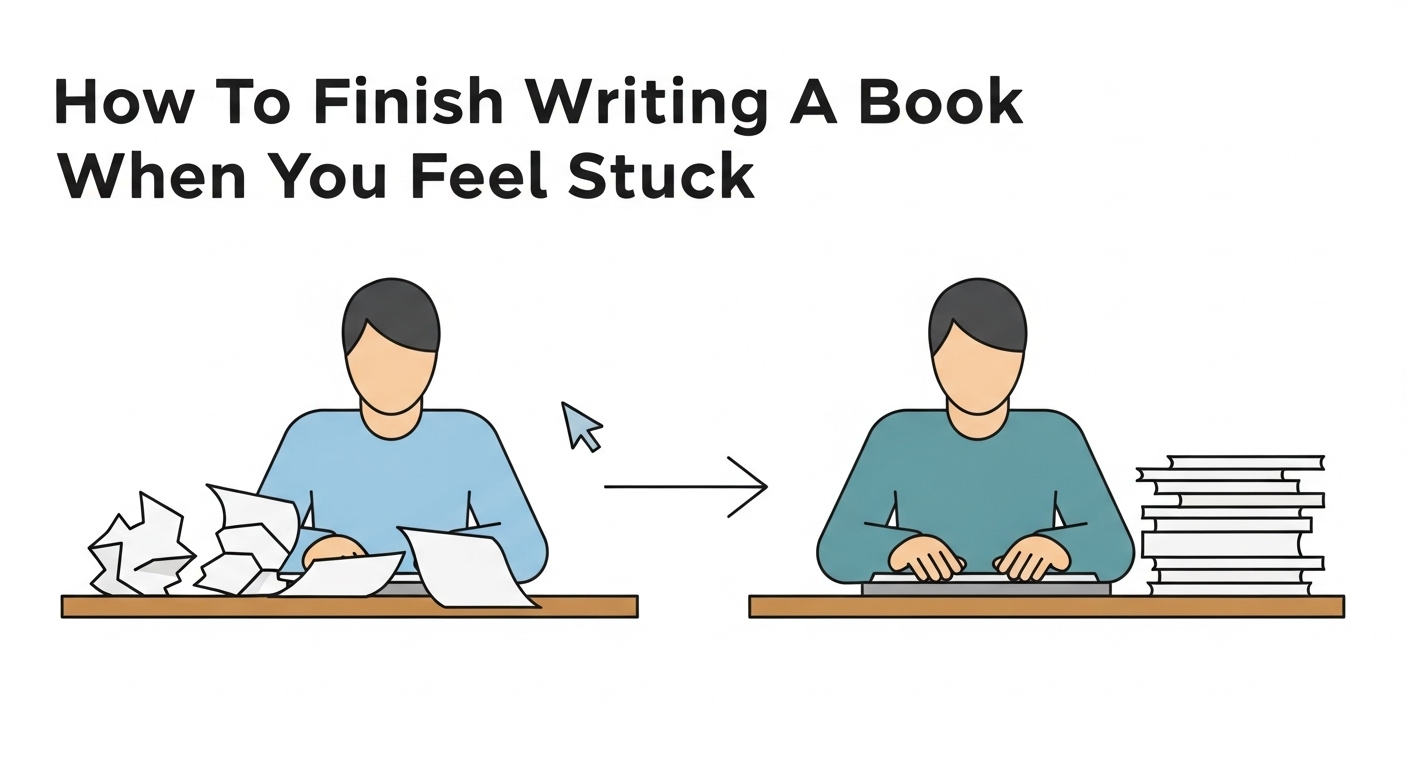
Hitting a wall while writing a book is something almost every writer experiences—but few openly admit it. You might feel blocked, frustrated, or unsure how to move forward. The frustrating truth is that most unfinished manuscripts aren’t abandoned because the idea was bad—they stall because the writer doesn’t know how to overcome the mental, emotional, or structural hurdles that inevitably appear.
This guide will help you understand why you’re stuck, pinpoint the type of block you’re facing, and show strategies that allow you to regain momentum and actually finish your book. Unlike quick-fix advice, these approaches are designed to be sustainable, helping you move forward even when motivation is low. Additionally, if you find the block is related to content creation, understanding How To Find The Best Ghostwriter For Your Genre can provide professional support to help complete your manuscript efficiently.
Why Writers Stall Mid-Book
Writing a book is a marathon, not a sprint. The first chapters often flow effortlessly. Excitement and new ideas make progress feel easy. But as the manuscript grows, the challenges multiply:
- Expectations rise: Early enthusiasm fades, and self-criticism increases. Every sentence starts feeling like it must be perfect.
- Emotional fatigue sets in: Writing requires sustained focus, and without a solid system, it can quickly feel overwhelming.
- The gap between vision and reality: Sometimes your book no longer resembles the story you imagined, creating frustration and procrastination.
- Complexity grows: Characters, plotlines, or concepts become more intricate, making decisions feel paralyzing.
These obstacles are rarely about talent—they’re about mindset, structure, and strategy. Recognizing this is the first step to moving forward.
Identifying the Type of Writing Block
Not all blocks are the same, and each requires a different solution. Understanding your specific challenge makes it easier to respond effectively.
| Block Type | What It Feels Like | Why It Happens |
|---|---|---|
| Mental Block | Ideas won’t come | Overthinking, fear of failure, or pressure to create “perfect” content |
| Emotional Block | Lack of motivation | Burnout, frustration, or self-doubt |
| Structural Block | Story feels chaotic or confusing | Weak outline, unclear direction, or gaps in planning |
| Perfection Block | Endless rewriting | Fear of judgment, needing approval, or perfectionism |
| Time Block | Never enough hours | Poor time management, unrealistic goals, or competing responsibilities |
By pinpointing your block, you can choose the right approach instead of forcing yourself through frustration.
Stop Waiting for Inspiration
A common myth is that writing requires motivation. The truth is that inspiration usually follows action, not the other way around. Waiting to “feel inspired” can keep you stuck indefinitely.
Instead, focus on small, manageable actions:
- Write a single paragraph or even just a sentence.
- Summarize the next scene in bullet points.
- Set a timer for 15–20 minutes and commit to writing during that block.
Even tiny steps build momentum. Professional writers finish books not because they feel like it—they finish because they follow a system, consistently showing up for the work.
Reconnect With Your Original Purpose
When you feel blocked, it often means you’ve lost sight of why you started. Revisiting your initial motivation can reignite commitment. Ask yourself:
- Why is this book important to me?
- Who do I want to reach with this story or message?
- What difference will finishing this book make in my life or career?
Writing down these answers can remind you that completion matters more than perfection. The goal is to get the manuscript finished; refinement comes later.
Give Yourself Permission to Write Poorly
Perfectionism is one of the most common causes of stalled writing. When every sentence has to be flawless, writing becomes exhausting.
- Accept that your first draft will be messy.
- Separate drafting from editing—your job now is to get words on the page.
- Remember: A rough draft completed is far more valuable than a chapter polished to perfection that never leads to a finished book.
Use Strategic Detours
If a particular chapter or section feels impossible, forcing it can increase frustration. Instead, try strategic detours:
- Skip to a later chapter that excites you.
- Summarize the stuck section in bullet points.
- Dictate your thoughts instead of typing them.
- Write about the chapter’s ideas, themes, or character arcs without writing the chapter itself.
Writing doesn’t have to be linear to count as progress. Every word, note, or outline you produce brings you closer to finishing.
Rebuild Structure for Clarity
A messy or unclear structure can stall even the most motivated writer. Nonfiction and memoir authors often face this problem, but it can happen in any genre.
- Revisit your outline: Don’t aim for perfection—aim for functionality. Even a loose framework provides direction.
- Ask yourself key questions:
- What is the book really about?
- What comes next for the reader?
- Which chapter or section must I tackle now?
A clear structure reduces mental friction and helps you make decisions quickly, keeping your writing moving forward.
Build a Sustainable Writing Routine
Finishing a book rarely happens through occasional bursts of energy. A consistent, repeatable system is essential.
Some options include:
- Writing a fixed number of words each day (e.g., 300–500).
- Scheduling writing sessions at the same time each day.
- Setting weekly progress goals instead of focusing on the entire manuscript.
- Treating writing like a professional task rather than waiting for “free time.”
Consistency beats intensity. Small, steady steps eventually lead to a completed manuscript.
Manage Self-Doubt Without Letting It Stop You
Doubt is natural, especially as your book nears completion. Instead of trying to eliminate it, acknowledge it and continue anyway.
- Remind yourself that first drafts are not final products.
- Focus on the act of writing, not the judgment of others.
- Accept that most authors finish books despite uncertainty—not because they feel confident.
When Outside Help Can Accelerate Progress
Sometimes being stuck signals the need for external support. A writing coach, editor, accountability partner, or ghostwriter can:
- Provide structure and clarity.
- Reduce overwhelm and procrastination.
- Maintain momentum and hold you accountable.
- Help turn scattered ideas into a completed manuscript.
Seeking help is a strategic decision, not a failure. Many bestselling authors use external support to complete their books.
Step-by-Step Plan to Finish Your Book
Writing a book can be a daunting process, especially when you feel stuck or overwhelmed. Breaking down the journey into smaller, actionable steps can make finishing your manuscript achievable. Here’s a detailed guide to help you move forward.
Identify Your Block
The first step is understanding what’s holding you back. Blocks can be emotional, structural, or practical. Emotional blocks involve self-doubt, fear of failure, or lack of motivation. Structural blocks occur when your story or ideas lack clear organization. Practical blocks stem from limited time, distractions, or external responsibilities. Identifying the root cause allows you to apply the most effective solution.
Shrink the Task
Trying to tackle the entire manuscript at once is overwhelming. Instead, focus on a small, manageable section, like a single chapter, scene, or even a few paragraphs. Breaking the work into micro-tasks reduces anxiety and creates a sense of accomplishment with every completed section, making the overall goal feel achievable.
Write Without Editing
Drafting and refining should be treated as separate processes. When you write, focus purely on getting words on the page without worrying about grammar, style, or perfection. Editing while writing can slow progress and intensify writer’s block. Give yourself permission to write imperfectly.
Rebuild a Loose Outline
If your manuscript feels chaotic, creating or revisiting a rough outline can restore direction. Even a simple outline highlighting key plot points, chapter summaries, or main arguments gives your writing a roadmap to follow, making the next steps clearer.
Commit to a Simple Routine
Consistency is more important than intensity. Set aside dedicated time each day or week for writing, even if it’s just 20–30 minutes. A regular routine helps build momentum, conditions your mind for creativity, and ensures steady progress over time.
Allow Imperfect Progress
Perfectionism can stall progress indefinitely. Embrace the concept of “imperfect progress.” The goal is to keep moving forward rather than producing flawless text. A rough draft is a starting point—it can be polished later.
Finish the Draft Before Judging It
Resist the urge to critique your manuscript before it’s complete. Only after finishing the draft can you objectively revise, restructure, and refine. Treat completion as the first milestone; editing and improvement follow naturally once the book exists in its entirety.
FAQs
Is it normal to feel stuck while writing?
Yes. Almost every writer experiences periods of doubt, confusion, or burnout.
Should I start over if I feel stuck?
Usually not. Revising an existing draft is easier than rewriting from scratch.
How long should I push through being stuck?
If resistance lasts more than a few weeks, reassess your structure or seek external feedback.
Can outlining help me finish my book?
Absolutely. Even a simple outline restores momentum and reduces overwhelm.
What if I never feel confident about my book?
Confidence often comes after finishing. Persistence matters more than certainty.
Final Thoughts
Finishing a book when you feel stuck isn’t about eliminating discomfort—it’s about moving forward alongside it. Every successful manuscript started as a messy, uncertain draft. The difference between someone with an idea and a published author is persistence, systems, and self-compassion.
Keep writing, even imperfectly. Every word brings you closer to the finish line.