
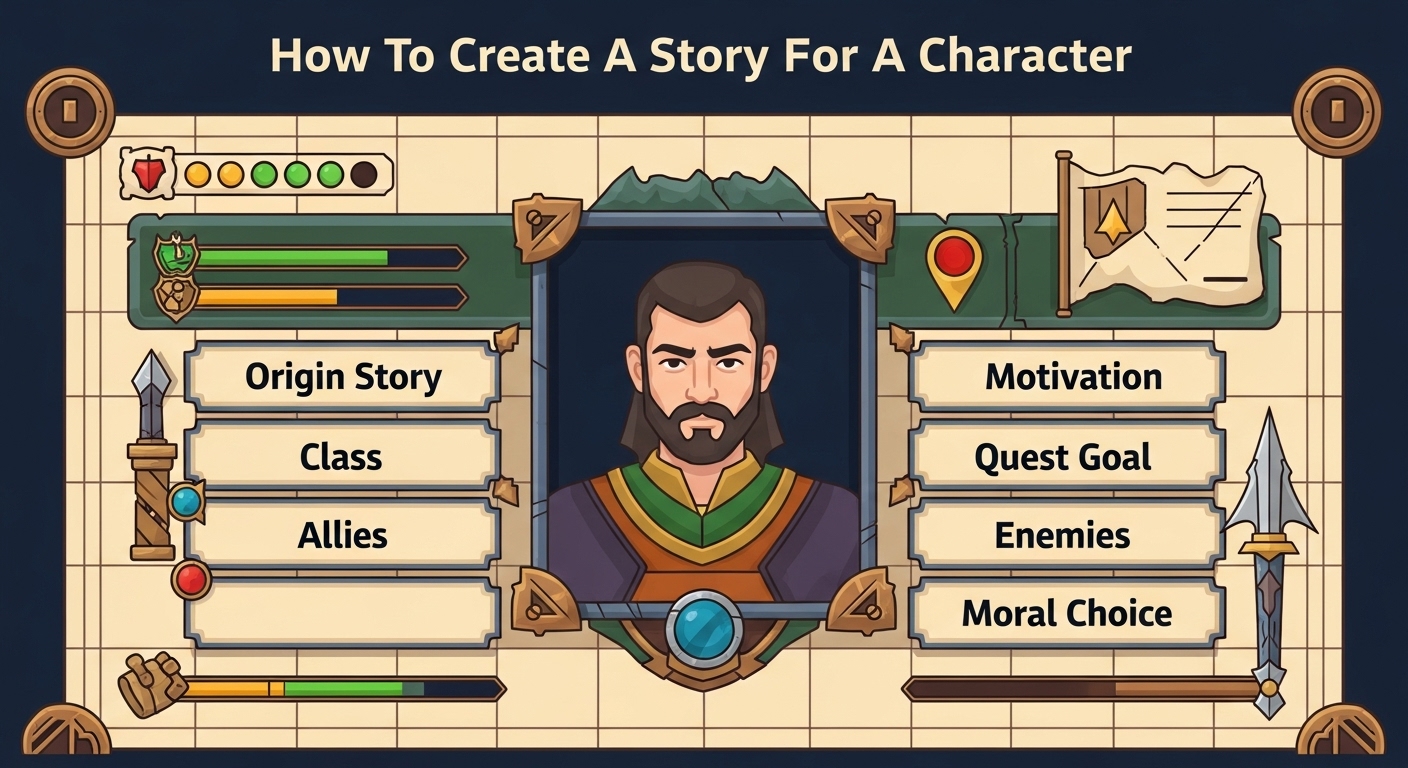
Creating a story for a character is more than assigning a series of events to them—it’s about building a living, breathing world where their psychology, motivations, and environment interact to produce a unique and compelling narrative. Readers in 2026 are no longer satisfied with flat characters or predictable arcs; they expect characters with complexity, believable flaws, and authentic drives that make their choices resonate emotionally. Every decision, every reaction, and every interaction should reflect a character shaped by past experiences, desires, and fears.
To achieve this level of depth, writers must go beyond surface traits and consider how internal motivations intersect with external pressures. Psychological drives—like ambition, fear, loyalty, or curiosity—form the core of a character’s decision-making. Environmental factors, such as societal norms, family dynamics, or cultural context, further influence their behavior, creating a rich framework for conflict and growth. By understanding these dynamics, the story naturally emerges from the character rather than forcing the character to fit into a pre-determined plot.
One practical way to organize and visualize all of these details is by using a character sheet template. A well-structured template allows writers to map out everything from psychological traits and motivations to relationships, key conflicts, and environmental pressures. Knowing how to create a character sheet template helps writers maintain consistency, track growth arcs, and ensure that every plot point is rooted in the character’s internal and external life. This approach also makes it easier to identify gaps in character development, anticipate decision points, and plan arcs that feel organic rather than contrived.
By combining psychological depth, environmental interaction, and structured planning through a character sheet, writers can craft stories that resonate with readers, offering narratives where the protagonist’s growth and choices feel inevitable and emotionally engaging. In 2026, this kind of character-driven storytelling is not just a creative advantage—it’s a standard readers expect in immersive fiction.
How to Create a Story for a Character: The 2026 Psychological & Motivational Framework
Step 1: Define the Character’s Psychological Core
Before a story can exist, define the internal engine of the character. This involves more than personality traits. Use the Motivational Core Framework:
| Core Element | Purpose | Guiding Questions | Example |
| Primary Drive | What motivates everything they do | What do they need more than anything? | Survival, power, recognition |
| Secondary Drive | Subordinate desire shaping choices | What do they want that conflicts or complements the primary drive? | Belonging, love, knowledge |
| Trauma/Trigger | Past experience shaping current behavior | What incident shaped their fears or strengths? | Childhood betrayal, loss of a mentor |
| Moral Compass | Internal rules guiding decisions | What lines will they never cross? | Loyalty above self-interest |
| Cognitive Bias | Tendency in perception or judgment | How do they see the world incorrectly or partially? | Overconfidence, mistrust of strangers |
Example:
Kiera, a 29-year-old detective:
- Primary Drive: Justice
- Secondary Drive: Recognition by peers
- Trauma/Trigger: Witnessed a childhood crime unresolved
- Moral Compass: Never harm innocents
- Cognitive Bias: Assumes authority figures are incompetent
This framework ensures your character acts consistently yet believably, even under extreme circumstances
Step 2: Map Environmental Pressures
Characters are shaped by their world, which interacts with their drives. Map environments to see where tension arises:
- Physical Environment: Where do they live/work, and how does it create challenges?
- Social Environment: Family, colleagues, society, cultural norms
- Temporal Environment: Era, season, and timing affecting events
- Conflict Zones: Spaces that trigger inner and outer conflict
Example Table: Kiera’s Environment
| Environment Type | Features | Impact on Character | Story Potential |
| Physical | Rainy, crime-ridden city | Heightens stress, forces improvisation | Police chases, urban hazards |
| Social | Colleagues skeptical of her methods | Creates tension, challenges authority | Conflict-driven interactions |
| Temporal | 6-month case deadline | Adds urgency, pressure | High-stakes decision-making |
| Conflict Zones | Abandoned warehouses, crime scenes | Triggers trauma | Drives flashbacks, fear, courage |
By layering environmental pressures, every scene becomes a reflection of both the world and character psychology.
Step 3: Establish Motivation-Conflict Pairs
Story arises from friction between what the character wants and what the world allows. Create a Motivation-Conflict Matrix:
| Motivation | Obstacle | Psychological Friction | Story Seed |
| Solve the case | Corrupt police captain | Trust vs justice | Must outsmart authority without breaking rules |
| Gain recognition | Colleagues undermine her | Pride vs collaboration | Public success comes at relational cost |
| Protect innocent | Past trauma | Fear of failure vs courage | Repeated flashbacks trigger hesitation |
This technique ensures that every plot beat grows naturally from the character’s inner life and circumstances, not arbitrary events.
Step 4: Develop Decision Trees Instead of Plots
Rather than outlining a standard plot, build decision trees where each choice shapes the story:
- Start with the character’s first major challenge
- List possible choices (react passively, confront, escape)
- Map consequences for each choice
- Connect subsequent decisions based on outcomes
Example:
Challenge: Discover evidence of a corrupt official
- Confront directly → Public exposure → Retaliation, media chaos
- Gather covert proof → Risk discovery → Delayed justice, suspense
- Ignore → Case remains unsolved → Moral compromise, internal conflict
This method makes the story dynamic, responsive, and character-driven, producing multiple possible narratives without losing cohesion.
Step 5: Embed a Growth Arc (Internal & External)
Every character story in 2026 must reflect change over time, both internally and externally:
| Arc Type | Description | Example (Kiera) |
| Internal | Emotional or cognitive transformation | Learns to trust colleagues despite skepticism |
| External | Achieving tangible goals | Solves the crime, restores justice |
| Hybrid | Combines both | Gains public recognition while overcoming self-doubt |
This ensures readers see real evolution, making stories memorable and impactful.
Step 6: Integrate Symbolic Objects and Motifs
Symbolism adds emotional depth. Objects or recurring motifs should reflect:
- Internal struggle (fear, hope, obsession)
- Growth milestones
- Theme reinforcement
Example:
- Kiera carries a locket from a victim as a reminder of justice, appearing at each turning point in the story.
Step 7: Refine Through Iterative Testing
Test your story by asking:
- Does each decision feel true to the character?
- Are the consequences logical, tense, and interesting?
- Does each environmental pressure amplify conflict?
- Are arcs satisfying emotionally and narratively?
Iterate until the story emerges naturally from character psychology, motivation, and environment.
Step 8: Optional: Multi-Character Web
For larger stories, create a character web showing interactions:
| Character | Relationship to Protagonist | Conflict | Complement |
| Mentor | Guides Kiera | Disagrees on methods | Offers wisdom and credibility |
| Rival | Competes professionally | Undermines Kiera | Tests her strategic thinking |
| Partner | Investigates together | Distrust initially | Supports growth |
This adds depth and ensures every interaction drives the story forward.
Quick Reference: Character Story Creation Framework
| Step | Core Action | Output |
| Psychological Core | Define drives, trauma, moral compass | Character personality engine |
| Environmental Mapping | Map physical, social, temporal pressures | Story tension sources |
| Motivation-Conflict Matrix | Link desires to obstacles | Story seeds |
| Decision Trees | Map choices and consequences | Dynamic story flow |
| Growth Arc | Define internal and external evolution | Character transformation |
| Symbolism | Integrate objects or motifs | Emotional resonance |
| Iterative Testing | Refine for realism and cohesion | Polished, engaging narrative |
| Optional Web | Map character interactions | Complex, interwoven plotlines |
Frequently Asked Questions
Do I need a full plot to start?
No. The story can emerge from the character’s decisions, motivations, and environmental pressures.
Can a story work with one character?
Yes, as long as environmental and internal conflicts provide tension.
How do I balance internal vs external arcs?
Tie external goals to internal growth. Every external choice should reveal or challenge internal traits.
Is this method good for any genre?
Yes. Mystery, fantasy, romance, or sci-fi all benefit from character-led story creation.
Final Thoughts
This approach is completely character-first, psychology-driven, and environment-aware. Instead of starting with plot points or genre formulas, you build a story that:
- Emerges from character decisions
- Explores internal and external conflict
- Uses environment and relationships to amplify tension
- Shows meaningful growth through arcs
By following this framework, you can create original, immersive, and unforgettable stories for your characters in 2026.
If you want, I can also make a fillable “Character Story Generator Sheet”, where you enter drives, conflicts, decisions, and motifs, and it outputs a ready-to-write story blueprint—this would be unlike anything traditional writing templates offer.
Do you want me to make that next?