
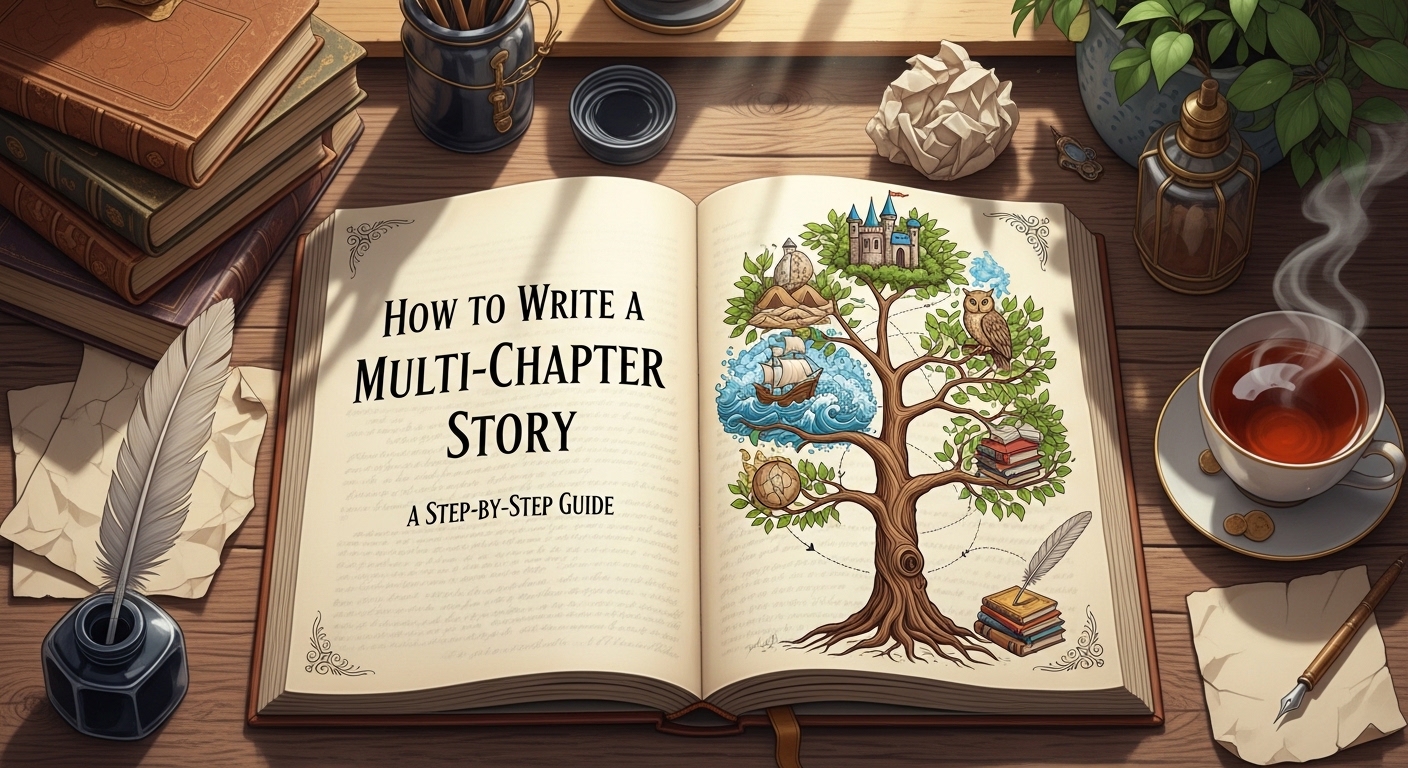
Writing a multi-chapter story can seem like a daunting task, particularly if it’s your first time tackling a project of this scope. Unlike short stories, which allow you to explore a single idea or moment, multi-chapter narratives demand a more structured approach, requiring you to think about pacing, character development, and plot progression over an extended span. Each chapter must serve a purpose—whether it’s advancing the story, deepening your characters, or building tension—to ensure readers remain invested from the first page to the last.
From crafting a sprawling fantasy world filled with rich lore, to constructing a tightly wound mystery with twists and suspense, or writing a character-driven drama with emotional depth, multi-chapter storytelling challenges you to balance creativity with planning. Without a clear roadmap, it’s easy to lose direction, create inconsistencies, or leave readers feeling disconnected from the narrative.
This guide is designed to take you step by step through the process of structuring a multi-chapter story, from brainstorming your central idea to outlining chapters, developing compelling characters, and maintaining momentum across the entire narrative. Whether you’re aiming to write a full-length novel or a serialized story, these strategies will help you write confidently and craft a story that keeps readers turning the pages.
1. Start With a Strong Core Idea
Before planning chapters, you need a clear central concept. Ask yourself:
- What is the main conflict or goal?
- Who is the protagonist, and what challenges will they face?
- What is the tone or genre of your story (mystery, adventure, fantasy, drama)?
A strong idea will guide every chapter, ensuring your story feels cohesive and purposeful. Without it, your narrative risks becoming aimless or repetitive.
2. Outline Your Plot Structure
For multi-chapter stories, planning your plot structure is crucial. Popular structures include:
- Three-Act Structure:
- Act 1: Setup (introduce characters, setting, and conflict)
- Act 2: Confrontation (challenges, character development, plot twists)
- Act 3: Resolution (climax and conclusion)
- Hero’s Journey: Perfect for adventure or fantasy stories, mapping chapters to stages like “Call to Adventure,” “Trials,” and “Return with Knowledge.”
- Snowflake Method: Start with a one-sentence story summary, expand into paragraphs, then chapter summaries—helpful for maintaining consistent pacing across chapters.
3. Plan Chapter-by-Chapter
Every chapter in a multi-chapter story should advance the plot, develop characters, or build the world.
- Give each chapter a purpose: introduce conflict, reveal secrets, or create turning points.
- End chapters with hooks: suspenseful moments encourage readers to continue.
- Balance pacing: alternate between action, dialogue, and slower, reflective moments.
- Track character arcs: ensure characters grow consistently across chapters.
Example Chapter Layout:
- Chapter 1 – Introduction: Meet the protagonist, establish the setting and stakes.
- Chapter 2 – Inciting Incident: Something disrupts the protagonist’s normal life.
- Chapter 3 – Rising Action: Challenges arise; relationships are tested.
- Chapter 4 – Midpoint: Big turning point; stakes rise.
- Chapter 5 – Climax: Confrontation with the main conflict.
- Chapter 6 – Resolution: Loose ends tied up; character growth complete.
4. Focus on Character Development
Readers invest in characters more than plot. Ensure your story’s characters are compelling by:
- Defining motivations: Why do they act the way they do?
- Highlighting flaws and growth: Characters should evolve by the story’s end.
- Maintaining consistency: Behavior should make sense across chapters.
- Using dialogue effectively: Reveal personality, backstory, and relationships through conversations.
5. Build Your World (If Relevant)
For fantasy, historical fiction, or unique settings:
- Introduce world details gradually to avoid overwhelming readers.
- Connect worldbuilding to plot or character arcs.
- Keep notes on locations, rules, and objects to maintain consistency.
6. Use Chapter Openings and Closings Strategically
- Openings: Quickly reorient the reader; use an action or line to remind them where the story is.
- Closings: Leave readers wanting more with tension, mystery, or emotional resonance.
- Avoid repetitive openings or abrupt endings that confuse readers.
7. Track Plot and Subplots
Multi-chapter stories often include subplots. To manage them:
- Ensure subplots connect to the main story or character development.
- Prevent subplots from overshadowing the main conflict.
- Weave subplots across chapters in a balanced way.
A simple tracking chart can help:
| Chapter | Main Plot | Subplot 1 | Subplot 2 | Cliffhanger/Hook |
|---|---|---|---|---|
| 1 | ||||
| 2 |
8. Revise for Consistency
Revision is key in multi-chapter stories:
- Check for continuity errors in plot, character behavior, and timeline.
- Ensure chapters flow logically.
- Trim chapters that slow the story down; expand ones that need more tension.
- Maintain thematic consistency across all chapters.
9. Keep Writing Momentum
- Set chapter-length goals (e.g., 1,500–3,000 words).
- Write the first draft without worrying about perfection—focus on getting your story out.
- Use storyboards, sticky notes, or writing software to organize chapter ideas.
- If pacing or consistency is challenging, consider using a ghostwriter or writing partner to help develop the story.
Final Thoughts
Writing a multi-chapter story requires planning, consistency, and careful pacing. Each chapter should serve a purpose, build tension, and reveal character growth while keeping readers eager to continue. By outlining your plot, tracking subplots, and revising carefully, you can craft a story that captivates readers from the first chapter to the last.
If you want, I can also create a free downloadable chapter planning template that lets writers map out every chapter with plot points, character arcs, and cliffhangers—perfect for multi-chapter stories.
If you want, I can also add SEO optimization with keywords and meta description to make it blog-ready for Google ranking. Do you want me to do that next?